

Inspired by the opening sequence of The Last Crusade, the Young Indiana Jones Chronicles was a massive project from George Lucas that debuted in 1992. Featuring two leads, Corey Carrier as child Indiana Jones and Sean Patrick Flanery as teenage and young adult Indiana Jones, the show incorporated real historical characters and events into every episode, and filmed all over the world. Due to the high budget and extended shooting time per episode, the show ended up airing sporadically between 1992 and 1993 before officially being cancelled by ABC. Over the next several years Lucas would film several TV movies made out of unproduced scripts for the 3rd season. While the original TV series was presented in no particular chronological order (one week may have been based in 1917 and the next in 1910) the show would later be repackaged in chronological order as The Adventures of Young Indiana Jones, with two episodes being edited together with newly shot scenes for continuity. This ranking is of all 22 repacked features.
22 – The Perils of Cupid
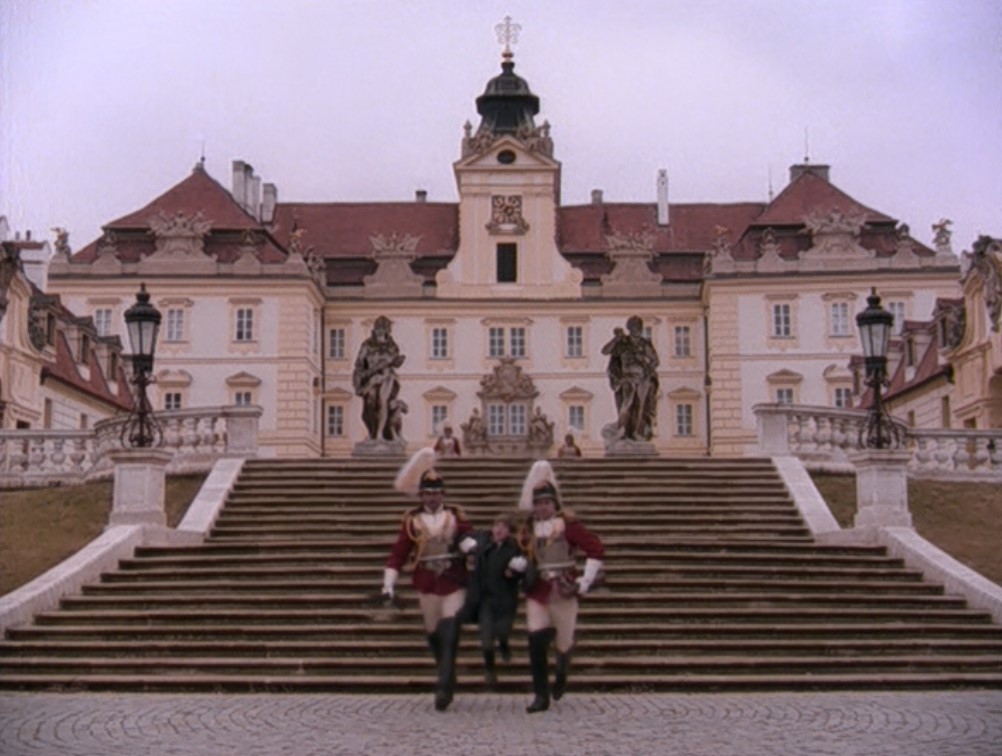
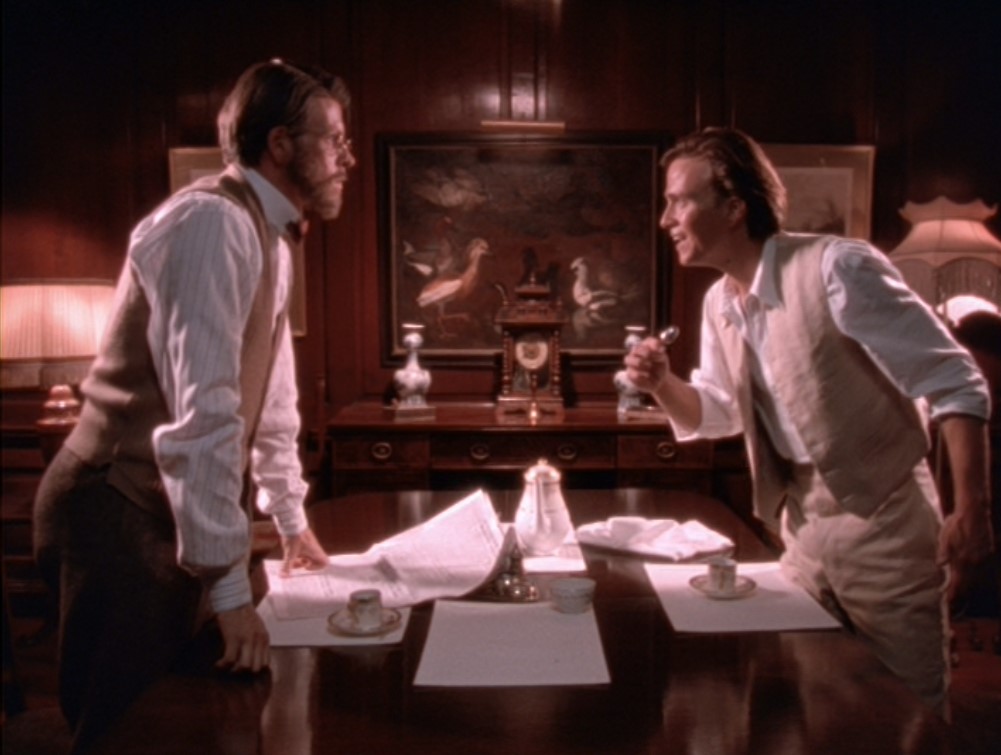
The action-less adventures are always solid in their own way, but they are completely different from what you expect for Indiana Jones. The first half of Perils of Cupid in particular, with 9 year old Indy “falling in love” for the first time with a young Austrian Princess, is much better than a story synopsis would lead you to believe. Like so many of the more drama based episodes, the highlight is when Indy encounters real historical figures. It doesn’t take a history buff to appreciate it either. Indy sits around a dinner table and debates love with Sigmund Freud, Carl Jung and Alfred Adler. There are humorous moments as each of these psychiatrists give their wildly different takes on the subject to a young boy, but the scene is actually quite touching in an innocent way. The other highlight is Indy’s extended break into the palace to see Princess Sophie. The scenes between Indy and Sophie do drag on a bit, but for the most part they work. The 2nd half in Florence is not as easy to take, as its more or less Indy’s Mom being hit on by another man, and contemplating leaving her husband and child for a famous composer. There are several scenes with Anna and Puccini filmed from the distance, and in darkness, which leaves it up in the air whether she actually cheats on her husband or not. Seeing as Anna Jones had only been briefly mentioned in The Last Crusade, and the dialogue in that film could have almost led viewers to believe that she had left her family, as opposed to dying which the series later established, there is some suspense as to whether or not she would leave. It’s far from pleasant suspense due to the subject matter. If the Florence sequences have one thing going for them, it’s the performance of Corey Carrier, who really makes you feel for Indy as he starts to understand what’s going on between his mother and Puccini. The visuals are spectacular, but the script isn’t the strongest, and the 2nd half of Perils of Cupid in Florence takes a steep drop in storytelling from the first half in Vienna.
21 – Journey of Radiance

The first half is your typical Corey Carrier story, with young Indy more or less on a guided educational tour in the location of the week, this time being India as he learns about all the different religions. These type of stories work a lot better as stand alone 40 minute episodes than being paired with another loosely connected story. This one is slightly more important than some of the other local educational tours, as the studying of various religions is important to almost all of the future Indiana Jones films. It’s nice to see Indy paired up with children for a change, and Mrs Seymour gets the closest thing to her own storyline, but the India segment is really nothing more than an extended explanation of Theosophy. The second half starts very similar, with Indy on a guided educational tour of China, which shows some fantastic locations. The most memorable thing about the China segment is it’s one of the only times in the series Anna Jones was featured in a lead role. There’s a tease involving a suspicious looking man following them, but in the end the story turns out to be all about Indy falling sick and being nursed back to health with Chinese medicine. Indy’s sickness is just a tool to fit more lessons in about the culture and history of China, but it’s handled so well you hardly notice. Corey Carrier gets some real acting to do during the worst parts of his illness, but it’s Ruth de Sosa who really steals the show as Anna Jones. Her breakdown as she thinks Indy is dying is without a doubt what she’s most remembered for on the show. By the time the final scene comes, a Thanksgiving like dinner with Indy, Anna and their hosts, the connection is finally made between the two segments. While Journey of Radiance may be the least exciting and most forcefully educational of the child Indy stories, it’s handled well enough to get a free pass.
20 – Masks of Evil
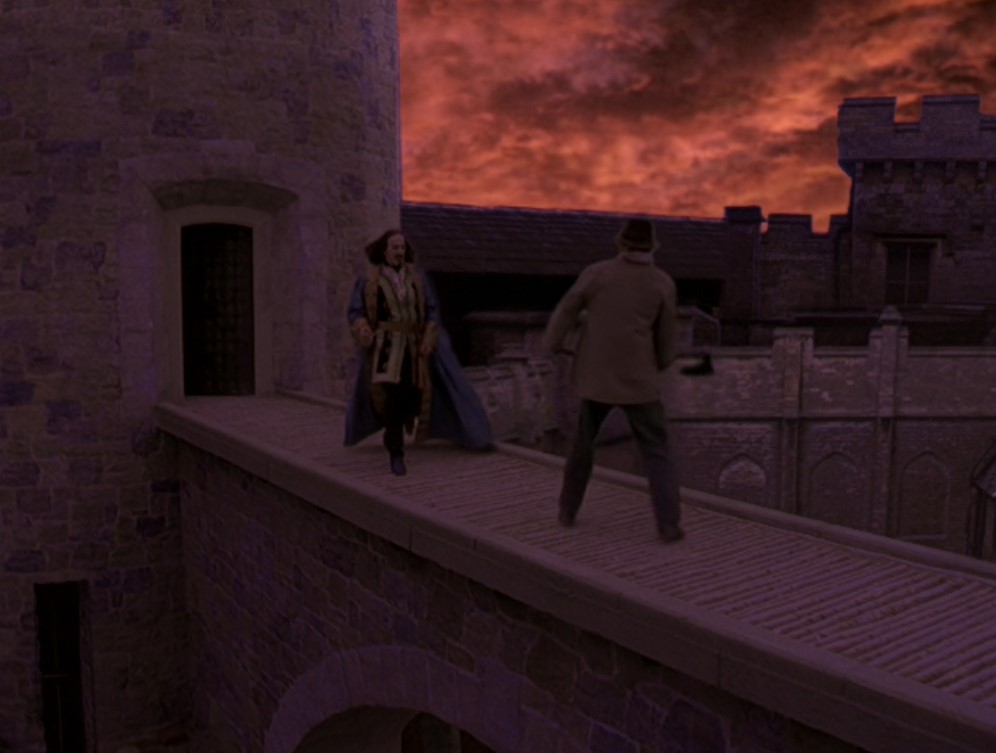
Those who watch Masks of Evil seem to either love it or hate it. I’ve shared both opinions over the last 20+ years. Expectations of what you’re going to get seems to make a difference in how you ultimately view it. When the first batch of VHS releases came out in 99, Masks of Evil was one of the first ones I was drawn to. The cover art grabs you, the synopsis of Transylvania and Vlad the Impaler incorporates the supernatural elements that are major parts of all the films. I remember sitting down to watch it the first time and being impatient and bored by the first half in Istanbul, which is a straight spy story. By the time that wraps up and transitions to Transylvania, it came across as beyond silly, and like you’re watching two completely unrelated stories that don’t fit together at all. One of the unfortunate things that came along with re-editing the TV series into 90 minute features is when episodes like these take place chronologically back to back, yet are so different that it becomes distracting. Sometimes this can be ignored, and other times it can’t. I never watched it again until recently, and going in knowing what to expect definitely improved the viewing. The first half in Istanbul is what I’m most turned around on. This might be one of the best individual episodes in the show’s history. There’s a classic film noir quality to it that reminds me of Hitchcock, Carol Reed and Orson Welles, complete with silhouettes, shadows, and plenty of tilted angles. Istanbul also has Sean Patrick Flanery’s most mature and grounded performance. It benefits from jumping into the story without the need for setup, and an established relationship with Molly probably the best developed love interest of the series run. The mystery surrounded the identity of a double agent is very compelling, not just for an early 90s TV series, but even in comparison to films. On the other hand, the Transylvania sequence has issues that can’t be ignored. It actually starts quite good, with Indy venturing into a creepier environment, and even when they arrive at the mansion, there are some genuinely creepy scenes. The Indy movies are at their best when the supernatural elements are used sporadically, and always kept as somewhat mysterious. Here it just suddenly goes full supernatural, with scene after scene of brief horror coming way too quick to fully appreciate. By the end it’s nothing more than a cartoon. But again, part of my defence is this plays better as a stand alone episode, especially when you consider it was meant as a one time Halloween episode. As mis-matched as the two stories are, I wouldn’t write off Masks of Evil when the first half is so unbelievably good. I believe it’s best to go in understanding that the very thing you’re likely to be excited about, the supernatural element, is going to be the worst part of the story.
19 – Passion For Life
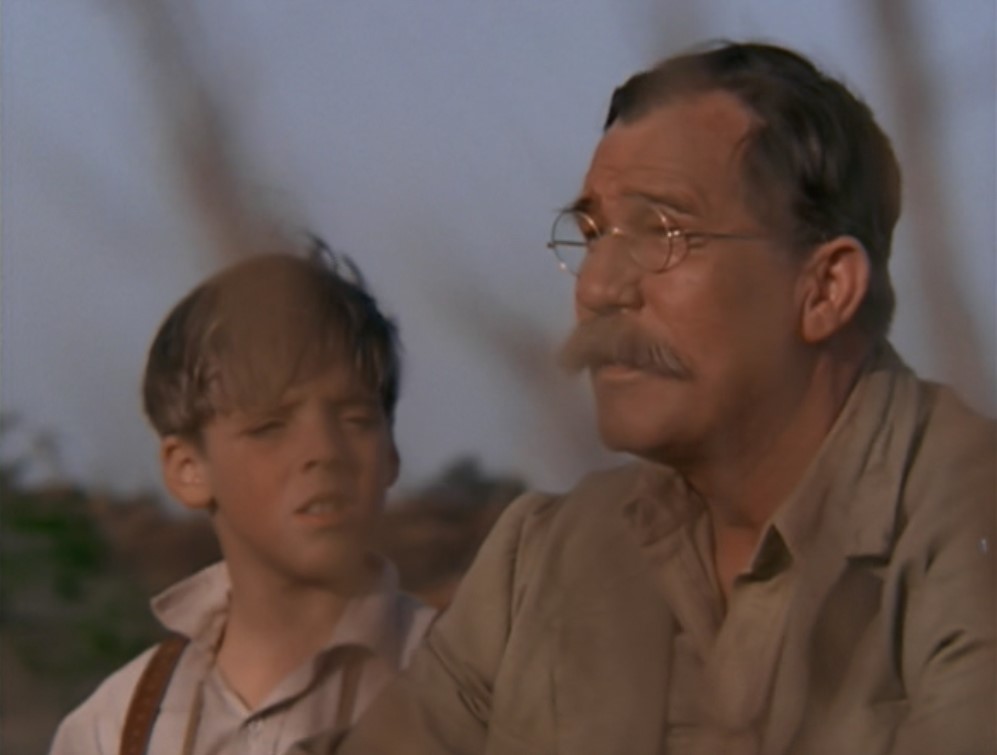
If any two stories don’t feel properly connected it’s the ones that make up Passion For Life. The first half covers a trip to Africa, with Teddy Roosevelt hunting a rare species, and Indy meeting a young boy who shows him the land. There’s almost no story, just a lot of scenery. I will admit the scenery in Africa is among the best ever filmed for TV. With a few edits this could be an episode of Planet Earth, but that’s not enough to carry half of the feature length. You get one really solid dramatic scene during the climax of Indy preventing Roosevelt from shooting an animal. It’s simple, maybe a little corny, but effective. The best sequence of “action” is young Indy lost at night, but its just not enough to fill out an episode. The concept of the series from the beginning was to offer a little bit of everything, and having the opportunity to send a crew to Africa, even if it is mostly to show scenery and wildlife is still something worth watching, and without a doubt there are viewers out there who probably love it. The 2nd half moves to Paris as Indy is introduced to many famous artists, including a young Norman Rockwell and a very hammy Picasso. There is definitely more story in the Paris scenes than Africa, but it’s hardly interesting, and the tone is so wildly different from the Africa scenes. There are some small action scenes that are played more for comic relief. It’s possible if these two episodes were paired with different stories it would have worked slightly better, but only slightly.
18 – Spring Break Adventure

A common trend among those features ranked near the bottom are the ones where the two episodes do not fit as well together. The first sequence in Princeton is very much designed to be like Hardy Boys, Nancy Drew, Tom Swift, with Indy’s high school girlfriend even being the fictional daughter of those books creator Edward Stratemeyer. Add in there a mystery involving Thomas Edison’s electric car, and Princeton is more or less Indy in the middle of a Tom Swift/Hardy/Nancy Drew novel. This episode is one of the more entertaining ones, and the real bonus is you get to see Indy as a regular high school kid enjoying his life. The Mexico story has Indy getting kidnapped and sort of joining Pancho Villa’s revolution. On the surface this should be one of the better stories, and it was even referenced in the film Kingdom of the Crystal Skull years later. Unfortunately it features so little Pancho Villa, and Indy’s rush to join the revolution is not believable. The story sets up Indy’s ambitions to leave home and join the war after realizing the revolution isn’t the cause he needs to join, so it makes sense to tell this story, but the placement in the series is where it’s all wrong. Had Lucas been able to continue on with the show, I bet we would have seen more episodes prior to this that could have improved on the character’s motivations. The train sequence is what the 2nd half is all about, and its as good as anything from the movies. This being the 2nd part of the original TV series premiere “The Curse of the Jackal”, the Mexico sequence was designed to establish the series and the character of Remy. You’d assume following a story chronologically would be the ideal way to view something, but in this case losing the first half of the Jackal story arc makes it feel like an after thought here.
17 – Adventures in the Secret Service

It’s unfortunate that in a lot of these edited features, the slower paced episode comes after the more action heavy one. Both stories in Adventures in the Secret Service are really solid, but the pacing once they’re paired together just throws you off. It begins with Indy escorting two brothers of the Russian royal family into enemy occupied Austria. The action gets more intense as he then has to smuggle them out of Austria. It’s very much like From Russia With Love, with lots of sneaking around on trains and border crossings. Indy is then stationed at desk job in Russia, where he witnesses the beginning of the Russian Revolution. Much like an earlier story involving the Easter rebellion in Ireland, Indy gets to see both sides of the politics represented through his group of friends. Of all the love stories Indy has throughout the series, this is one of the more interesting ones, partly because in this case Indy is less invested than the girl, and Indy in a way is using her and the other young Russians for the purpose of gaining intel. Indy’s conflict as he works undercover provides for some solid drama and conflict. Although the 2nd half of Adventures in the Secret Service is a more serious and talky episode, the scale of both Lenin’s rally and the march in the climax are truly epic. I would have loved to see even more of this on the end, even if it was just a few more of those huge overhead crowd shots of the street.
16 – Tales of Innocence

The majority of Indiana Jones fans probably prefer the action heavy episodes. This is not a story for those fans, but if you enjoy seeing different genres explored, Tales of Innocence is something entertaining and different. The first half in Italy has Indy meeting a young Ernest Hemingway, and them unknowingly competing over the affection of the same girl. It quickly turns into a bit of a screwball 1930s rom com. It’s this rom com tone that makes the first half so appealing. The highlight is a musical battle between Indy and Hemingway as they each attempt to impress the girl. There’s a side plot with Indy working undercover which has no bearing to the rest of the episode, but the one major action scene with Indy and Hemingway dodged an air strike pulls everything together. The 2nd half in Morrocco is extremely different from the first half, but even as a stand alone episode Morrocco could be a bit confusing. What starts as an odd but surprisingly effective love story with Edith Wharton eventually evolves into an old school detective story like something out of The Thin Man or Agatha Christie. The scene where Indy reveals all his evidence and solves the mystery is arguably the most enjoyable of either episode. The biggest problem with the Morrocco segment isn’t just that it doesn’t feel like it naturally pairs with Italy as well, but more that the two stories in the Morrocco segment itself feel like they belong in different episodes.
15 – Attack of the Hawkmen
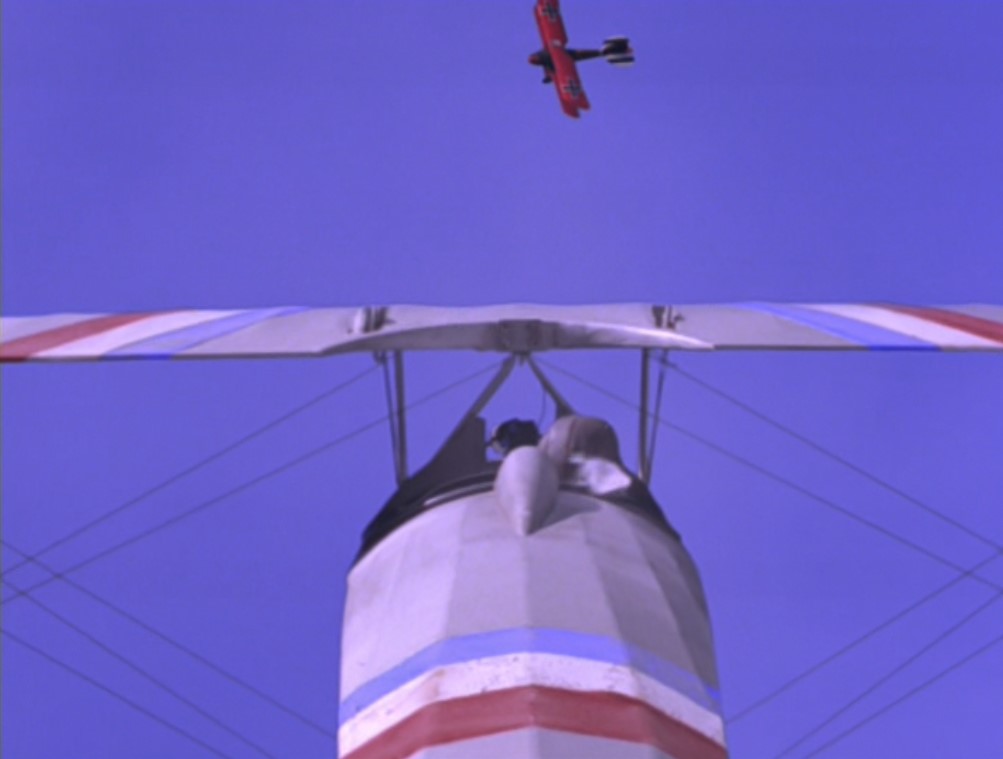
George Lucas is well know for his love of aviation and dog fights, from Star Wars all the way up to Red Tails, so it was only a matter of time before Young Indiana Jones had a story centred around that. Unfortunately the films established Indy having no skills for flying an airplane. Instead of being in the cockpit, the two parts of Hawkmen have Indy working as an air reconnaissance photographer, and then undercover in German territory to try and convince a German airplane designer to defect. This story transitions from Indy the soldier into his time in the Secret Service. The dog fight scenes are the best part of this feature, as is the Red Baron’s character. It’s a different depiction than one would expect, with his arrogance played as more playful than sinister. The story in the Red Baron episode is pretty thin, but the idea of the Red Baron challenging an Allied pilot to a duel is fun. The 2nd half has Indy going full James Bond, complete with gadgets and secret phrases. Indy’s discomfort in his new role is what makes the 2nd half so enjoyable. He fumbles with the gadgets constantly, makes mistakes and has to scramble to stay on mission. Even though the story is very different, there’s something about the tone of Attack of the Hawkmen that feels very much like The Last Crusade. The last minute addition of the Red Baron to the climax is a bit of a stretch, and the huge hanger explosion at times looks pretty artificial, but it’s still a huge step above any other 90s action series.
14 – My First Adventure

The first half of this feature was taken from the 2 hour premiere “Curse of the Jackal” but only the child portion with Corey Carrier is included in My First Adventure. After a fun opening montage showing Indy growing up with his father and mother, the story moves on as Henry takes the family on a trip around the world to promote his new book. The first half revolves around Indy meeting his tutor Ms Seymour, travelling to the pyramids, meeting a young TE Lawrence, and excavating a tomb. As part of the original series premiere “Curse of the Jackal” they pulled out all the stops in the Egypt sequence to make it as much like the Indy films as possible. This is one of the few archaeology based episodes of the series, and considering you’re dealing with a child actor and not a young adult, the Jackal story is handled much better here than in the 2nd half featured in Spring Break Adventure. It then transitions to Tangiers where Indy befriends a young slave and gets kidnapped by slave traders. The Tangiers segment was filmed 4 years later after the show had been cancelled, so Carrier is clearly several years older despite it taking place back to back with the Jackal story. Unlike many of these pieced together features, the two stories tie together nicely, mostly due to the new opening explaining this as a trip around the world. There’s a good blend of history, culture and adventure. Pairing Indy up with another child in the Tangiers action is a welcome change in pace from a lot of the other Corey Carrier segments. While the Egypt story is more traditional Indiana Jones, its the pairing with Omar and child mischief getting Indy in hot water that works best in this.
13 – Hollywood Follies

Hollywood Follies was the first TV movie aired after the original series cancellation, but is the final Young Indy story chronologically. After getting involved in the jazz scene and Broadway in the previous 2 stories, Hollywood Follies has Indy being transferred to the movie industry. Event though this was filmed as one TV movie, two very different scripts were reworked from the unfilmed 3rd season. The first half has Indy being sent in as a hired gun to get Erich Von Stroheim’s over schedule and over budget “Hollywood Wives”. This story is all about Indy being in over his head trying to take control of the production, and recruiting help from various Hollywood figures to trick Von Stroheim into filming an ending. It’s silly and at times absurd, but always enjoyable. After briefly meeting John Ford in the first half, Indy’s next job has him working as Ford assistant on his latest Western that needs to film in 5 days. Indy ends up working as an actor and stunt man when they are left with no other options, which ends in a huge horse/carriage chase scene in the climax. A nod to one of the most famous stunts from Raiders is worked into this action sequence. Even though it’s shot for a film, I’d hold it up there with some of the best action scenes of the entire Young Indy series. As this was filmed a few years before the TV films ended, there was probably no intention to have this be the final Young Indy story, but mostly thanks to that final chase scene, it actually works as a satisfying final adventure for the series. With multiple characters carrying over from the first half to the 2nd half, the two Hollywood stories work really well together. From start to finish this is one of the most all around fun Young Indy stories, but don’t expect any serious drama or depth.
12 – Demons of Deception

Edited together from one of the earliest episode in season 1 and one of the latest episodes of season 2. The two stories that make up Demons of Deception work fantastic on their own, but the downside of presenting these stories chronologically is you sometimes have to deal with radical changes in tone. The first half in Verdun picks up immediately after the previous story Trenches of Hell, with the battle of the Somme still ongoing. As one of the larger battles of WW1 its nice that Lucas and co. kept Indy in this location for more than just a one off adventure. Instead of directly being in the trenches, Indy is working as a courier. There’s still plenty of action, with the largest sequence of the episode showing Indy on a motorbike trying to escape a bomb drop. While Trenches of Hell shows you the brutal and devastating side of war, Demons of Deception focuses more on the mental toll the war takes on the soldiers. Arguably the best scene in the Verdun segment is Indy sitting around a table with several other soldiers as they debate what the war is actually about. Another memorable scene has Indy visiting Remy in the hospital where he admits to trying to stay on the injured list to keep out of the trenches, something that leads to the climax as Indy tries to get word to the front lines to call off an attack that’s sure to kill Remy and everyone else. There are a few bridges scenes that were shot to connect the first half with the second half in Paris. Indy is on leave and staying with a friend of his father. Through a dinner party he meets and starts dating Mata Hari. The Paris segment is drastically different from the first half, although I could see this pairing well with the Africa scenes in Tales of Innocence much better, as that even references Indy’s relationship with Mata Hari. Carrie Fisher wrote the Paris episode, and despite it being low on action, its a fantastic look at Indy maturing from teenager to adult. He’s in his first adult relationship, but still has some naivety and struggles to grasp the concept that he may simply be a fling. Either of these stories edited together with something similar in tone could have easily cracked the top ten, but being slightly mis-matched keeps it just outside.
11 – Espionage Escapades

I could see how something so different in tone like Espionage Escapades could throw of some viewers. While the story is what you’d come to expect from Young Indiana Jones, with a little bit of spying, some twists and betrayals, it is so uniquely different fron anything else they produced over the course of the series. Both episodes that make up this feature are flat out comedies. The first half in Barcelona has Indy working with a team of spies from other nations to create a bit of chaos. Indy gets involved with a Russian ballet, hooks up with a Russian ballerina, and tries to expose an affair with a German officer. Everything of course goes sideways. This episode was directed by Monty Python’s Terry Jones, and it definitely has a Python like feel to it. The scene where Indy tries to use the reflection off his cod piece to signal a message in morse code is absolutely hilarious. Despite mostly being a comedy, if you boil down the plot, it’s actually a solid espionage story. The second half in Prague plays less on a complicated spy plot, and more on the mundane. Indy arrives and has to wait for several days on a single phone call. He soon realizes the phone has been taken out of the apartment he’s stationed in, so the rest of the episode is spent dealing with Czech bureaucracy as he struggles to get a simple phone installation. The comedy in the Prague sequence is more sketch like, with a lot of back and forth satirical conversations, but there are several scenes with over the top slapstick physical humour as well. The final scene is as absurd as anything ever featured in Indiana Jones, but the last punchline as the reason for the phone call is revealed plays really well. Espionage Escapades may not be for everyone, but if you know what to expect going in it’s a blast to watch.
10 – Scandal of 1920

The final four Young Indy features cover his return to America, with the final three each exploring a different aspect of American culture. Scandal of 1920 has Indy moving to New York during the Summer and getting a job behind the scenes at a Broadway show. The primary historical character is George Gershwin, who gets Indy the job with his new musical, and also plays mentor to Indy as he inadvertently starts dating three women at the same time. There’s no action or mystery in Scandal, and its rather low on romance despite the three simultaneous love stories. If anything this is a comedy with a few nice dramatic moments scatttered throughout. While there is amusement from Indy’s innocence as he juggles all three women, and they each get significant development, there is some repetition in the story. For at least half of Scandal you see Indy interacting with one girl, then having almost the exact same interaction with the 2nd, and then almost the exact same interaction with the 3rd. This may have worked slightly better in the TV series, but this being a single 90 minute film is likely the reason it feels a bit repetitive. The rest of the story surrounds the launch of the Scandals of 1920 musical as it suffers from both creative, staffing and financial issues. There is some form of action as Indy is forced to run the show from backstage, with lots of fast paced physical stunts as he struggles to have the show delivered without complications. This takes up the majority of the last 20 minutes, ending the episode on a high note. Sean Patrick Flanery’s performance is the real highlight, as he gets to play opposite all three women in a different way, and an early performance from the late Anne Heche steals every scene she’s in. Add to that a brief cameo from Jeffrey Wright as Sidney Plechet, a role he stole every scene in during a previous story. The performances more than make up for the lack of story and repetition.
9 – Mystery of the Blues

One of the TV films, Mystery of the Blues is most well known as the episode where Harrison Ford appeared in the intro and closing as an older Indiana Jones. This story starts slower than others, as it mostly follows young Indy learning how to play Sax, witnessing racial tensions and getting involved in the underground jazz scene with Sidney Bichet, played brilliantly by Jeffry Wright. It’s not what you expect from the later years of Sean Patrick Flanery, but the beauty of Young Indiana Jones is you get all different types of plots and settings. The story slowly builds though, and in the final act it suddenly turns into a prohibition era detective story. Appropriately, Indy is roommates with Elliot Ness. Suddenly a nice, but somewhat slow episode becomes the most fun and energetic mystery story of the Later Years. In a lot of ways Mystery of the Blues is the companion to Spring Break Adventure. At the start of Spring Break, Indy is living a normal life as a high school student, working at a diner, in the middle of an old school detective story. Years later Indy is back working as a waiter, in College, and right in the middle of an old school detective story. Bichet and the jazz scene all but gets dropped as Indy, Ness and Ernest Hemingway get in warehouse shootouts, car chases, and encounter corruption as they work to solve a murder. There is a nice twist on the end of the story, not just with the revelation of who one character is, but with the ending being more of a downer than you’d expect in such an adventure based story. The final scene with Harrison Ford, at the time probably thought to be his final appearance as the character, is milked for all its worth, complete with the classic Indiana Jones theme playing. It’s a fun appearance, and you can tell how much Ford enjoyed coming back, even if it was just for an opening and closing.
8 – Travels With Father

This was technically the last story to be released, and I would assume the last one filmed. Corey Carrier is at his most confident and engaging. It’s a shame the show didn’t get an extra year or two for him to really develop as an actor. The Russia sequence starts with Indy really being a kid and getting into some trouble, only to be punished and run away. On the road he meets Leo Tolstoy, who he at first doesn’t realize who he is. The scenes between Tolstoy, played by Michael Gough, and Carrier as Indy are easily the best Carrier had with any guest star. It’s an interesting dynamic to see a kid and a very celebrated older man bickering and not getting along at first. The episode gets even better as Indy and Tolstoy start to connect, and their two stories mirror each other perfectly. The child Indy stories are low on action, but the brief scenes of Indy and Tolstoy escaping the attacking troops and finding shelter from the storm are exciting enough to give the episode a bit of a boost. The original TV movie of Travels with Father with intercut with scenes between teenage Indy and Henry years later. Those scenes ended up in The Winds of Change, but you can see how their relationship was developed as Indy runs away, and even more so in the second half taking place in Greece, as Anna leaves Indy and Henry together for the rest of the episode. What starts as Henry educating Indy on the history of philosophy in Greece soon turns into more of a light hearted comedy. It’s nice to see Lloyd Owen get to play more of the fun side of Henry Jones, without losing the authoritative father side. The climax takes place at the hanging monasteries, which is not only one of the best looking locations the show ever visited, but perfectly lends itself to an action sequence. Henry and Indy are in a cage being lowered off the cliffs, only to have the cage get stuck half way down. After spending an entire night hanging half way down the cliff, Henry and Indy have to come up with an escape plan, and as the show so often does, the escape plan ties in perfectly to the themes and lessons that were scattered throughout the episode on logic and wisdom. Travels With Father is without a doubt the best feature for child Indy. The story and action scenes are entertaining, but more than anything its the character development and unique opportunity to see Indy and Henry interact that makes it so memorable.
7 – The Winds of Change
Of all the edited features in the Adventures of Young Indiana Jones, The Winds of Change had the most puzzle pieces to assemble it together. The first half takes the Season 2 episode of Paris, 1919. The 2nd half takes less than a handful of scenes in Princeton from the final TV movie Travels with Father, which were originally just bookends showing Indy and Henry’s falling out as he returns from the war. Then new scenes were shot specifically to pad out the Princeton sequence. The Paris story follows Indy, as he works as a translator during the Paris peace talks post WW1. Indy is actually a very minor character in the Paris, mostly watching in the background as the peace talks go on. He’s just there as a familiar face to cut to every once and a while, as the majority of the story is just a reenactment of the peace talks. It’s still fascinating to see how the real events went down, as well as provide foreshadowing to how the rise of the Nazi’s would eventually come about a few decades later. There are plenty of characters and discussion to provide different perspectives on the German’s treatment, the division of Arabia, and Woodrow Wilson’s formation of the League of Nations. Viewers more interested in action and adventure might not find as much entertainment, but I’d rank the Paris story as one of the strongest the series ever had. Once this is done Indy finally travels home, along the way meeting a new girlfriend, and has a chance to catch up with his high school girlfriend Nancy, although it barely acknowledges that he more or less abandoned her when he left for the war. Indy also struggles to reconcile with his father, meets a few historical figures, and continues to debate what to do with his future. Princeton is drastically different from Paris, but since most of Princeton was filmed specifically to complete The Winds of Change as a feature length video release, there are enough references to the events in Paris to tie the two sections together. The scenes of Indy and Henry’s heated arguments so perfectly setup their relationship in The Last Crusade. In the end I’m not that bothered with the lack of story, as the Indy and Henry scenes are unbelievably good, and the performances from Flanery and George Lloyd more than deliver what fans had always wanted to see since the series started.
6 – Treasure of the Peacock’s Eye

Within a year of the TV series ending, the TV movies began. Treasure of the Peacock’s Eye wasn’t the first one made, but it is chronologically the first story to take place post TV series. It opens with the final moments of WW1, and then jumps right into the most traditional Indiana Jones adventure the series ever did. If someone had no knowledge of the series actual concept, this is probably what they would have envisioned Young Indiana Jones to be. It is in every way an Indiana Jones movie on a television budget. It’s a treasure hunt story with action, exotic locations, classic B movie action scenes, and lots of colourful characters. The 2nd act takes more time to build story and characters, and features 2 of the best action scenes of the series back to back, with the boat explosion and race to the islands. Then the final act comes and the action comes to a halt. Suddenly a young Indy movie becomes the young Indy TV series again, with nearly 30 minutes dedicated to the tribes in New Guinea, and the meeting of historical figure Bronislaw Malinoski. The New Guinea sequences were based on an unproduced story from the TV series, while the treasure hunt for the first 2 acts was written specifically for this film. In a weird way the slowing down of the pace throughout actually helps you appreciate the New Guinea scenes even more. I’d have a much harder time watching it if we went from the fast paced action at the beginning into Indy being mentored by an anthropologist. The scenes between Indy and Malinowski are some of the best dramatic scenes of the series, which is important as it sets up Indy’s decision to finally go home and go to school. Flanery and Tom Courtenay play the scenes perfectly, as do Flanery and Ronny Coutteure’s final scenes as Indy says goodbye to Remy. Remy may have been the closest thing the series had to another regular, and from start to finish Coutteure was incredible in this story.
5 – Love’s Sweet Song
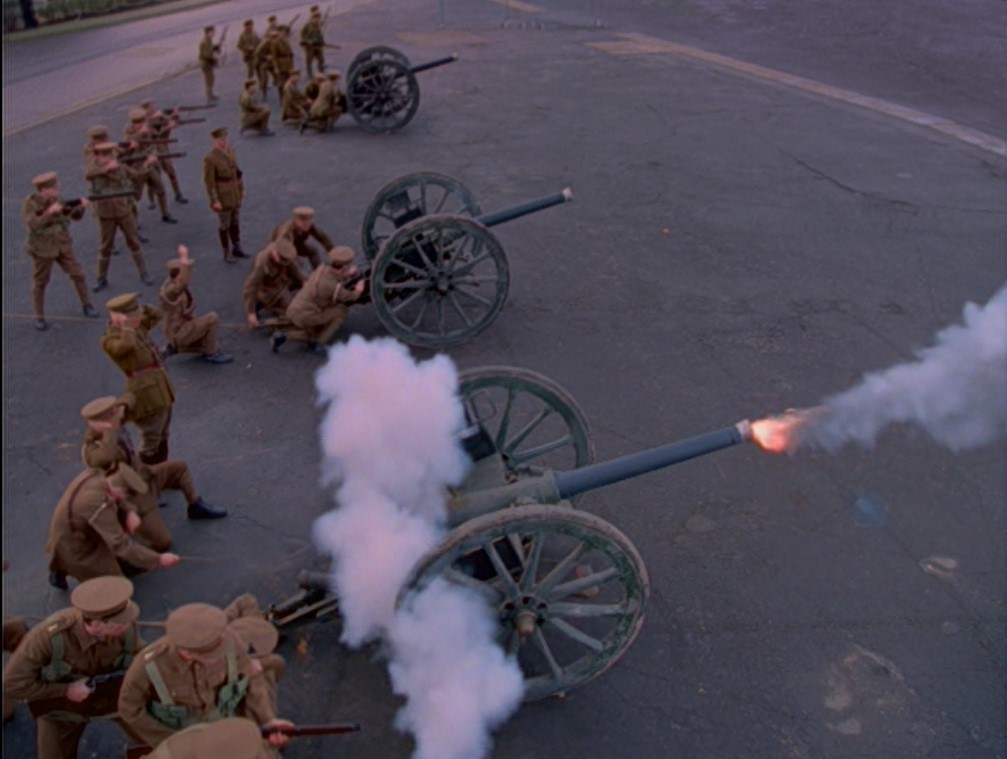
This is an example of how editing episodes together can benefit the overall narrative. After 5 stories with Indy as a child, there was only Spring Break Adventure covering teenage Indy before he decided to go off to war. Love’s Sweet Song covers him as a 16 year old arriving in Europe, earning money to travel to London, using a false identity to enlist in the Belgium army, and then the waiting game before being called up. While the two episodes that are edited together are very different, they both allow for Indy’s motives and reasoning for joining the war to be explored more than in the brief moments of Spring Break Adventure. As the title gives away, these are both love stories, or in the case of one more an infatuation story, but there is a lot more going on besides that. The Ireland segment covers the political climate, the arts and culture, and climaxes with some solid action with the Easter Rebellion. In contrast to this the 2nd half in London is a lot calmer. Indy meets and falls for a young woman, played by a young Elizabeth Hurley who is involved in the suffragette movement. While Indy is positioned more as an adult, this may be the last time you really get to see his youth and naivety, with him unsuccessfully trying to pickup a girl at a feminist rally, or showboating about his language skills only to be schooled by her. None of this makes him look foolish, just inexperienced. What sets these stories apart from even the other action-less young Indy adventures is that Indy is 100% an observer. He has almost no knowledge of the environment, the customs or politics, and is able to act simply as a a character trying to learn a few things through experience. By the time he gets his call up to the army at the end of the episode, you’ve almost forgotten that’s what both stories were ultimately about, but you can appreciate the next phase of the War Years even more now that he’s not so much an overly ambitious teenager. While many of the stories that were pieced together after the fact stick out, Love’s Sweet Song’s episodes are perfect companions for each other. This is even more impressive when you consider the London segments were filmed near the beginning of season 1, and the Ireland one filmed near the end of Season 2.
4 – Daredevils of the Desert

Even though this was originally produced as only a 1 hour episode for the TV series, it has been expanded to a little over 80 minutes. While this does put it on the shorter side for the features, the fact that it’s one complete story and not 2 episodes joined together might make this one of the few complete stories in the current Young Indy collection. There is a lot going on in Daredevils, with Indy going undercover across the desert with a fellow spy, played in a very early role by Catherine Zeta Jones. The story is mostly about Indy’s mission to assist in an attack by the British and Australian Light Horsemen. There are so many memorable scenes, including Indy posing as an Arab trader and trying to talk his way out of an altercation, and a rope bridge crossing/shootout as a sandstorm approaches. After arriving in Bersheeba the plot gets more complicated, as there are double agent reveals, lots of deception as Indy tries to keep the location of the allies attack secret, and some incredible twists that almost nobody will see coming. We get another early celebrity role with Daniel Craig playing an arrogant German soldier. What makes particularly the climax of Daredevils so impressive is that while the original episode footage plays out, scenes from Director Simon Wincer’s decade old film “The Lighthorsemen” is edited in so seamlessly that it took me three viewings after knowing this fact to even pick out. Simon Wincer directed many of the best Young Indy episodes, and this won’t even be his highest on the list. I always know when a Young Indy episode works if it entertains me and makes me want to learn more about the real historical events. After seeing this over 20 years ago I immediately started reading and watching whatever I could on TE Lawrence and the Australian Lighthorsemen. Those who watch the series for fun adventures like the films will love Daredevils of the Desert, and history buffs will get just as much out of it.
3 – Trenches of Hell
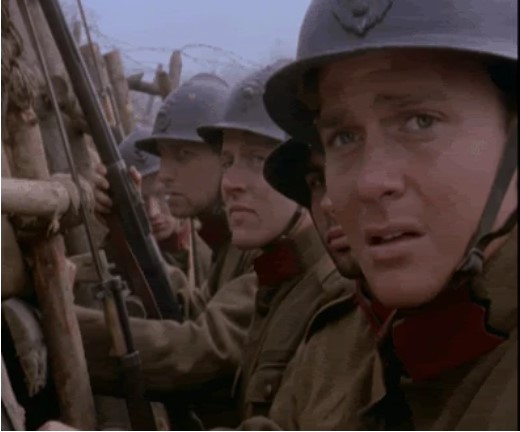
The War Years officially begins here, even though background is given that Indy has been in the war for a while, and already made the rank of Corporal. Like most of these features, two episodes of the TV series are edited and bridged together, but what Trenches of Hell has going for it is the two episodes were written and aired back to back, essentially making this the first 2 parter in the show’s history. You do get two very different stories, with the first half covering Indy’s involvement in the Battle of the Somme, and the second covering his capture and escape attempts from various German POW camps. Seeing as this was a family friendly show on network TV, the Somme sequences are obviously tame in comparison to something like Saving Private Ryan, but it’s impressive how gritty and graphic some of the violence was for the time. The battle sequences are well staged, with the occasional stock footage shots thrown in that are probably more noticeable to modern audiences watching on DVD than those who watched on TV. The story starts with Indy unofficially left in charge of a Belgian unit simply because all the officers had been killed, and then the Belgians are placed under the command of a newly promoted French officer. There’s a good amount of tension between the soldiers, particularly one who Indy suspects had actually killed one of their former commanding officers. The 2nd half brings some good twists, as Remy and Indy are separated for the first time during the Sean Patrick Flanery stories, and Indy poses as a french officer to get better treatment in the prison camps. This backfires and he’s sent to the maximum security facility, where he meets and plans an escape with Charles Degaulle. The historical figure roles feel natural here, and they bring something interesting to the story, which isn’t always the case with the series. Half way in I felt it was impossible to top the trench scenes, but the prisons escapes might be even better. Sean Patrick Flanery didn’t often bring Harrison Ford qualities to his performance, but particularly during the POW scenes you pick up on a lot of Harrison Ford mannerisms and speech, which is interesting as that’s when Indy is more or less acting arrogant as a means of surviving. I hadn’t watched this story in several years, and honestly forgot how good it is on every level.
2 – Phantom Train of Doom

It’s always a benefit when there are 2 episodes of the series that already tie together before the late 90s reshoot and re-edits. Even though both halves of Phantom Train are very different stories, you have many of the same characters appearing in both, and it follows Indy and Remy on one leg of an adventure. They get lost on the way to their next posting, and then meet up with a group of soldiers who have all but aged out and been put to the side. They more or less trick Indy into tagging along on a mission to find a mystery train carrying the war’s most powerful gun. Paul Freeman, who played Belloq in Raiders, appears for the 2nd/3rd time as Frederick Selous, the man leading the “Old and the Bold”. It was unavoidable that many of the WW1 stories would be heavier, so it’s a huge treat when you get a story like Phantom Train that’s just a pure fun Indiana Jones adventure. The search for and action scenes involving the train are up to movie quality. Despite the fact many of the older soldiers don’t get any real development, the actors bring so much personality. The 2nd half involves the same soldiers attempt to capture a brilliant German Colonel, which takes an unexpected turn as Indy gets trapped in an out of control hot air balloon with the Colonel. This extended sequence has them always barely out of reach of the pursuing Germans. Although Phantom Train as a whole is all about entertainment, there is a maturing arc for Indy, as he goes from being an unwilling and judgmental party member, to being so dedicated to the capture of the Colonel that he struggles with knowing when it’s time to give up. While it’s not #1 on this list, I would recommend Phantom Train of Doom as being the highest recommendation for any fans of the movies looking for an adventure story along the same line of the films.
1 – Oganga, The Giver and Taker of Life

Outside of the opening battle sequence, which is incredible, Oganga features almost no action for the remaining 80 minutes. On the surface Oganga is just a simple travelogue, showing the brutality of surviving the disease in the country, but it is arguably the best written and most intelligent story of the series. Indy is promoted, but put under the command of an officer who objected to his actions in battle. They butt heads as they lead a squadron through the Congo on a mission to pick up and deliver a shipment of weapons. The mission suffers massive casualties due to the disease and sickness, and Indy eventually comes into the care of Dr. Albert Schweitzer. These episodes connect perfectly thanks to the sub plot around one missing child they encounter, and the dilemma over whether to take the child with them. The showdown between the commanding officer, Indy, and the rest of the squad as the decision is made on whether to leave the child is really powerful. An even more effective scene comes later where Indy accompanies Schweitzer to treat a tribal elder, and the differences in the local and European values of life are explored. Young Indy was always intended to be educational, but it never took itself too seriously. Oganga proves that Lucas the rest of the crew were fully capable of making intelligent and thought provoking TV. So much credit goes to writer Frank Darabont, who only a few years later would go on to write and direct The Shawshank Redemption and The Green Mile. It’s stories like this that prove George Lucas was looking to make a higher quality TV series than had ever been seen on network TV before. One of the biggest compliments I can give Oganga is how you forget you’re watching Indiana Jones. At no point was I comparing it to other Young Indy stories, nor was I even consciously viewing Schweitzer as a fictional representation of a real historical character. He just feels like he naturally belongs in the story. This is a more mature story that probably wouldn’t be as enjoyable for kids, or those only familiar with the films. From the scene where they debate taking the one surviving child from the village, to the showdown where Indy has to choose whether to follow orders or side with the rest of the men, or the scenes where decisions need to be made whether to continue allowing their own men to die or trust a German hospital, nothing in Oganga is presented as cut and dry.
 Rank This List