
To give some personal context, I’m not typically very invested in animation. I tend to fall asleep watching animated movies (its a natural reaction and not due to boredom) and long form Japanese anime has never clicked with me. Avatar: The Last Airbender is not Japanese, but it is heavily influenced in style and storytelling by countless Japanese anime series. The last thing I expected when I first checked out the show was to get more invested in an animated series than I had been in most live action series that I loved. I can pin it down to the fantasy epic similarities to both Star Wars and The Lord of the Rings. Avatar has a select group of mystical warriors with very basic magic powers, and a huge backdrop of an evil empire taking over by one dark lord. That’s the Star Wars. Then you have a small group of “small” and unlikely characters secretly trekking across the world on a mission save everyone from the dark lord. That’s Lord of the Rings. Even with those similarities Avatar has its own clear identity, with a perfect blend of epic long form storytelling mixed with well written comedy and entertainment. As someone who doesn’t love animation, I would rank this as one of my top 10 favourites series of all time. With the surprise release date movie up for the sequel film, Avatar Aang, coming in just over a week, I set out to watch and rank the entire series of Avatar one season at a time. Starting it off, fresh off my rewatch, is Book One: Water’s episode ranking.
20 – “The Fortune Teller” (Episode 14)
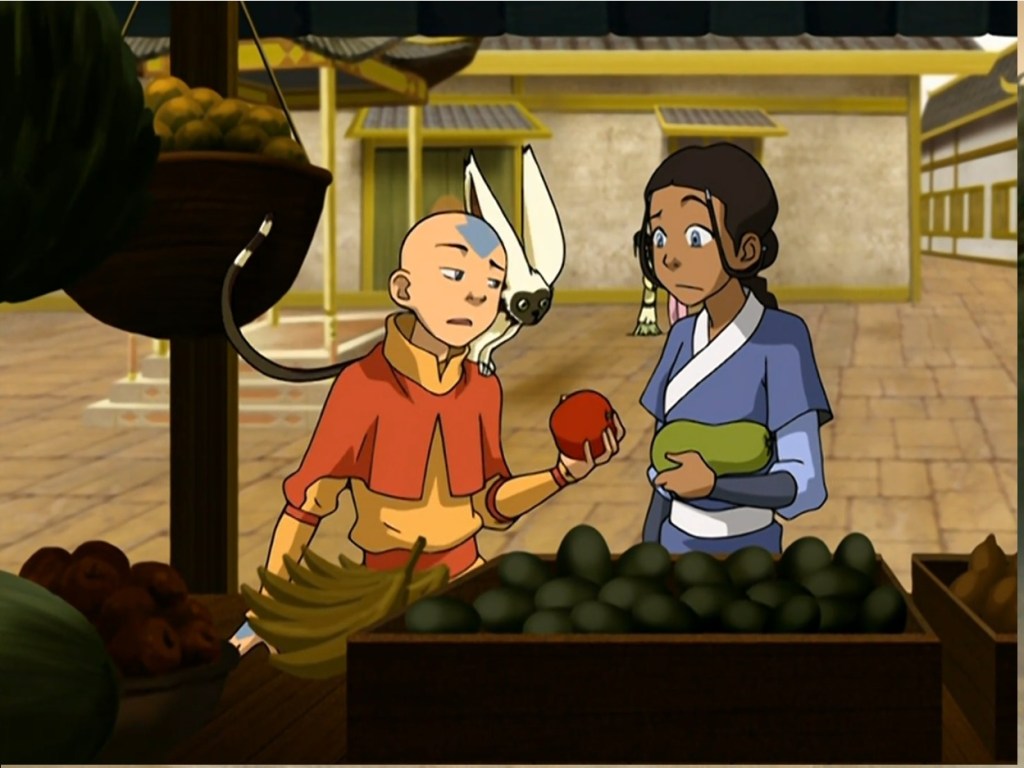
Let me start by saying there are no episodes of this series I don’t like. Unfortunately The Fortune Teller is just the one I like the least. The good is how they handle the romance plot involving kids. It’s done innocently and charming, but not in a juvenile way. There may not have been a better way of telling this story than by wrapping that around a fortune teller subplot, but it’s just not something that draws me in. There’s one brilliant moment of comedy from Sokka when he encountered the guy in the village wearing red shoes every day. I did like the visual of the volcano eruption and building of the motes, but it gets tacked on so late in the episode that it suddenly felt like you were watching another episode.
19 – “The Waterbending Scroll” (Episode 9)
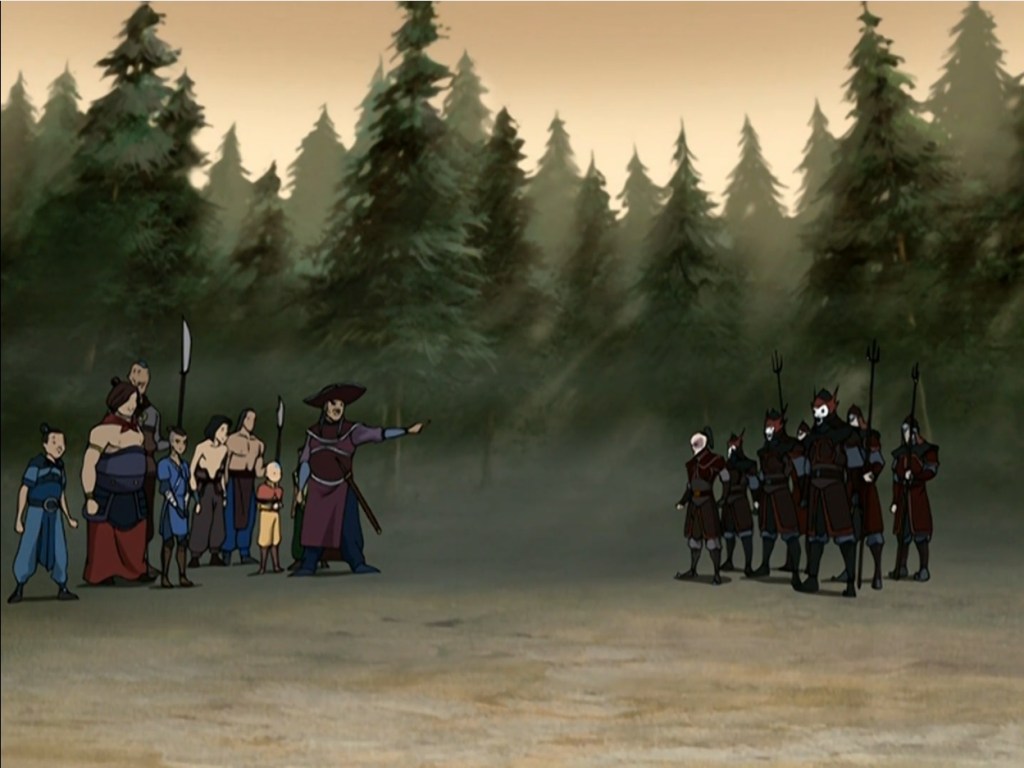
There’s nothing wrong with a brief filler episode, which is more or less what The Waterbending Scroll is. The only thing that actually progresses the story is Aang starting to learn Waterbending, which is hugely important considering this follows The Winter Solstice 2 parter. For the most part this is just a fun side mission with theft, pirates and con artists. Even Zuko and Iroh spend most of the episode on a side mission “shopping”. Zuko’s involvement is so limited that he basically shows up to tease Katara with her necklace before being benched by the pirates.
18 – “Imprisoned” (Episode 6)
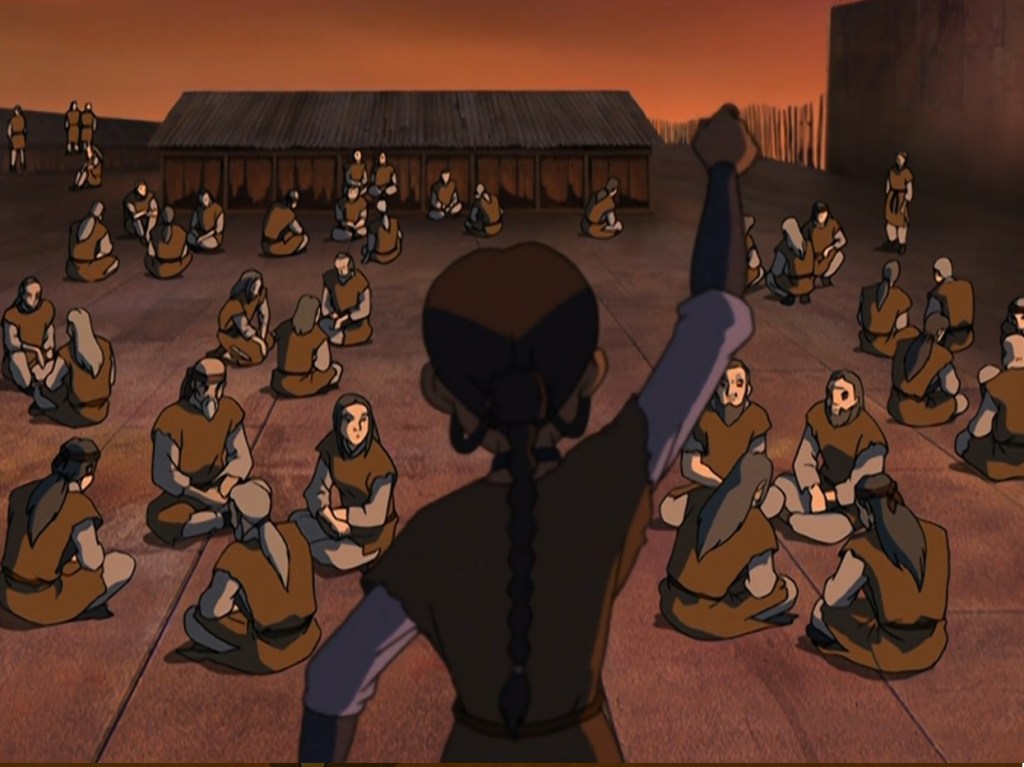
Showing the Fire Nation rounding up Earthbenders and essentially throwing them in an internment camp is a really solid idea for a story. It is a lot to have the imprisonment, Katara and gang breaking in, and the start of a rebellion in just 22 minutes, though. The weak point of this episode is definitely the character of Haru. He more or less exists for the same reason Suki existed a few episodes prior, but this time he’s there for Katara to play off of. The problem is he’s extremely dull, and he will easily go down as the one character that returns later in the series that really didn’t need to be brought back. The rebellion scene ends up being very rushed. One of a few episodes that I wish had been split into 2 parts to better tell the story.
17 – Jet (Episode 10)

Part of me always feels like Jet is overrated as a character, but then I rewatch his first appearance and I see the appeal. The very obvious attempt to make him the “cool bad boy” has never worked 100% for me, but the complexity and shady aspect of the character works much better. Only a few episodes removed from seeing a sympathetic Fire Nation character it’s an interesting contrast to see a jaded outlaw who has the right motivation but takes their actions to an extreme wrong level. It’s by no means a classic episode, but the questionable morals make it more interesting than it appears on the surface.
16 – “The Northern Air Temple” (Episode 17)
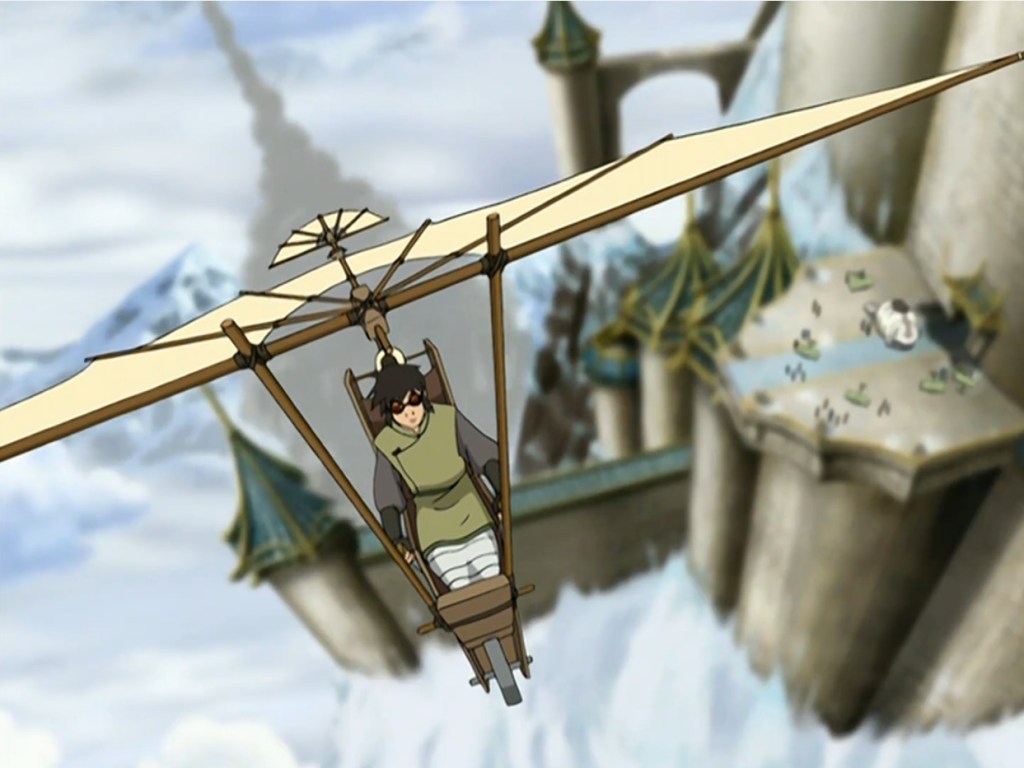
It was an interesting idea to have Aang discover the Northern Air Temple populated by what he thought were Airbenders, only to realize they were just inventors using technology to create airbending type vehicles. My only wish is this could have been played out longer than just the opening scene. Letting it go a little longer would have allowed for some nice character moments with Aang feeling like he wasn’t alone. There is an interesting twist on the story by having the inventors actually be weapons developers for the Fire Nation, but again this was a premise that would have worked better if it could have played out longer. Much like I said with Imprisoned the downside of this episode is that it was too much for 22 minutes. A perfect scenario would have been using both ideas here as a 2 parter.
15 – The Great Divide (Episode 11)
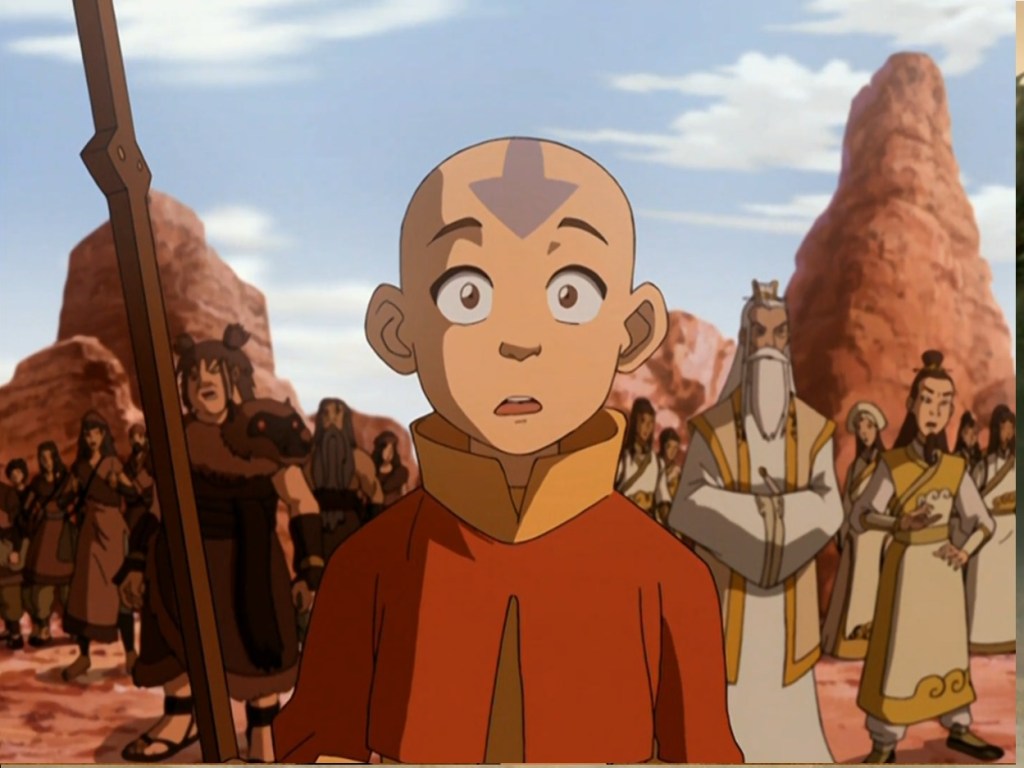
I’m well aware this is generally regarded as the weakest episode of the series, and on one hand I understand the arguments against it. It’s a complete stand alone story that doesn’t progress the overall story in any way. At the same time, I feel like this appears out of place only because the show never really did a complete stand alone story again after this (although I will talk about a very similar episode next season). Most shows have numerous filler episodes, and I can’t fault The Great Divide just because they never (or almost never) featured more episodes like it. I’ve always appreciated how this episode shows a very real world depiction of feuding tribes at each others throats for such seemingly petty reasons. Real world depiction with humour of course. This is what has happened in our world since the beginning of time, and they did a great job of depicting political and social feuds for a kids show. We might not get Aang’s main story moving forward, but having him forced to act as an Avatar diplomat without having the age and experience necessary is a solid idea for the character. And the resolution genuinely makes me laugh. Does he just make the whole thing up? Yes. Is it completely plausible that tribes would be at war for years based on exaggerated tales that lost all meaning over the generations? 100%.
14 – Bato of the Water Tribe (Episode 15)
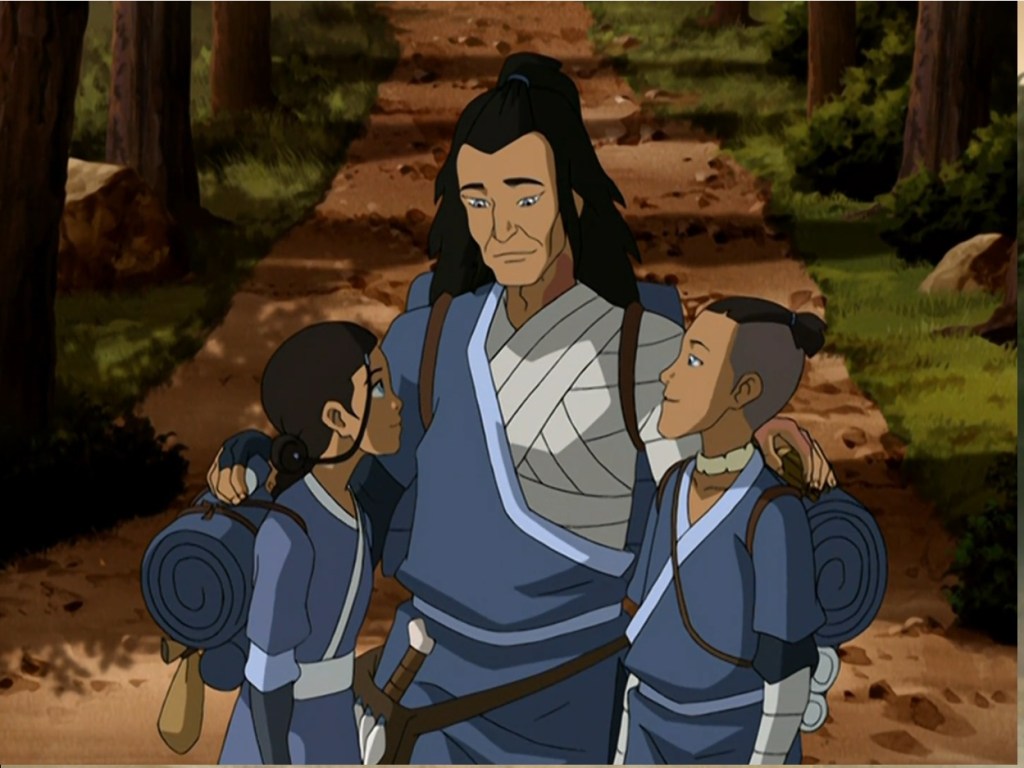
For the first time since the premiere the show goes into real detail about Katara and Sokka’s home life and backstory with their father. Like so many other episodes it’s how a basic plot can be used to develop characters that is most impressive. Aang, through missing one small sentence on the end of a conversation, gets the wrong idea about whether Katara and Sokka will stick with him. The writers were smart enough to show Aang behaving like a child in his response. I love the reminder that he’s a lonely and sometimes immature kid who doesn’t always react the right way to situations. And considering this is the Water tribe season, with the majority of the focus set to be on the Northern tribe at the end, it’s perfectly placed to keep the identity of the Southern tribe fresh in your mind beyond Sokka and Katara.
13 – Warriors of Kyoshi (Episode 4)
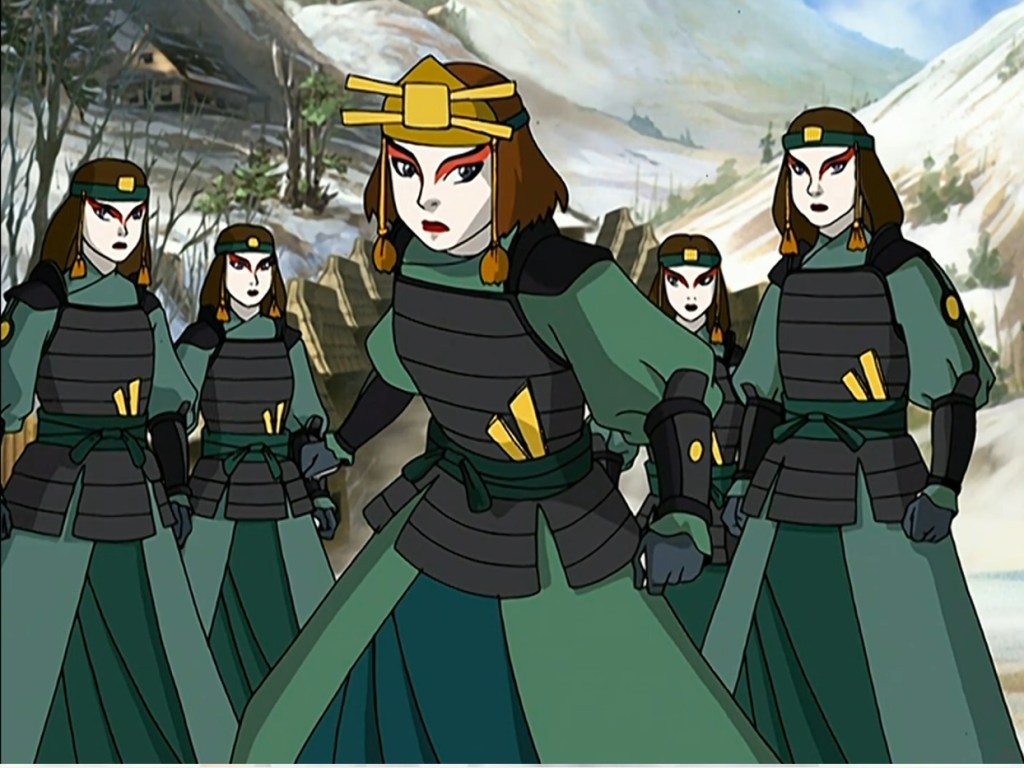
On a first viewing this comes across like the first filler episode. It introduces Suki and the Kyoshi warriors, who won’t really reappear until the 2nd season, and Suki herself won’t become seriously pivotal until the 3rd season. This is one thing that improves the episode on repeat viewings, as you know how important Suki will eventually become to the story. At this point she was really there just to introduce a unique set of characters and give Sokka his first real story. Sokka is hands down the comic relief of the series, and this episode is there to fully showcase that. Aang’s part of the story is also more comedy and entertainment based, with the “fame” of being the Avatar kind of going to his head. It’s uneventful at this point in the story, but probably the first purely fun episode.
12 – The Southern Air Temple (Episode 3)

Is it a little too soon to get into the demise of the Airbenders? I’m torn on this as part of me feels this should have waited a few more episodes, but looking at it from the POV of a first time audience, they clearly wanted to establish the world of the Airbenders as quickly as possible for a new audience. In the later seasons I think they would have waited longer to get here. Commander Zhao is always a weird one to go back and watch, as he only exists for the first season and you quickly move past and forget him. He’s an antagonist for the antagonist, and as Zuko has not been made sympathetic in any way yet, that immediately makes Zhao an ultimate villain. The part of the episode in the air Temple is basically required viewing to understand Aang’s history, but it’s the interactions between Zuko and Zhao that make this episode. The most important part of the episode is Aang slipping into the Avatar state, and as that power progresses through the series it’s key to note how it develops here out of anger.
11 – The King of Omashu (Episode 5)
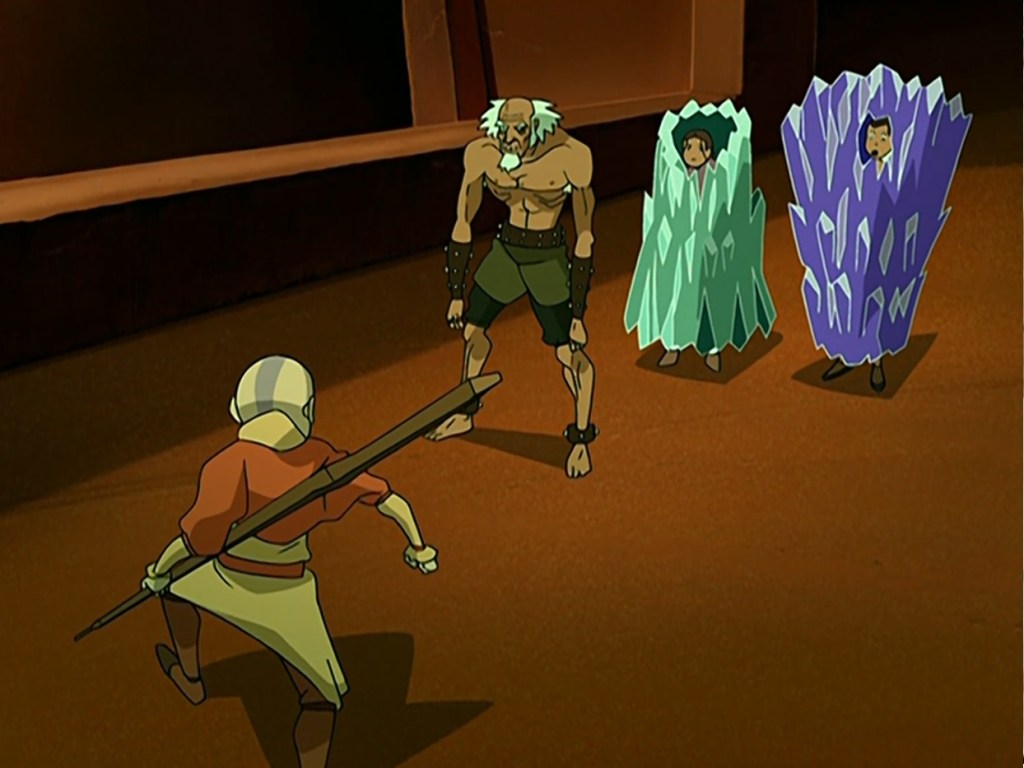
There are 2 things the earliest episodes are filled with, the introduction of new environments on a fast tracked basis, and the introduction of characters that appear to be one offs that will end up coming back later in the series. Binging the series does make it feel like they’re throwing too many one offs at you early on. What sets this episode apart is the introduction of the character Bumi, who Aang was already familiar with 100 years earlier, so they get to meet up again as completely different people. Of course what makes this more unique is the characters aren’t clued into each other’s identities until nearly the end of the episode. Add the surprise for the audience of seeing the frail old man suddenly revealed as something completely unexpected.
10 – The Spirit World – Winter Solstice, Part 1 (Episode 7)
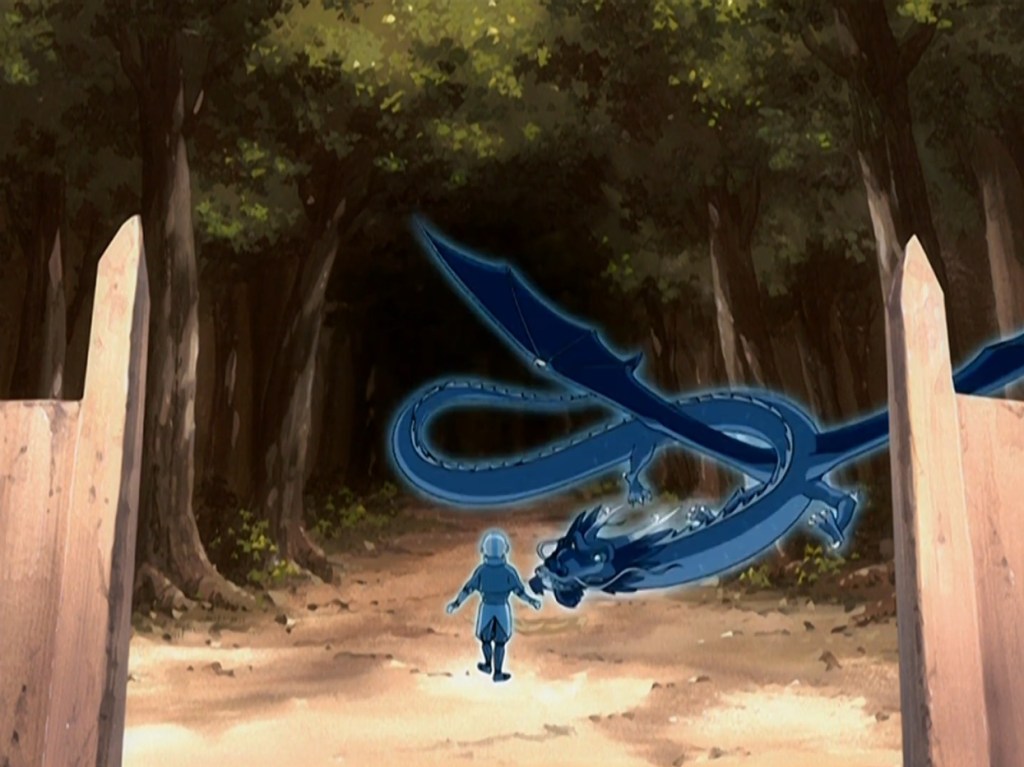
This was the first episode to really do something different. We had seen Aang enter the Avatar State, but for the first time we see him travel to the spirit world. Some of the future Spirit World stories would occasionally get a little too surreal and bizarre for my liking, but this was just the right mix of mysterious and intriguing. Despite being a two parter in title, this is kind of it’s own episode with a cliffhanger that leads into part 2. There’s the good addition of Sokka in distress, and Iroh’s capture by the Earth kingdom which not only gives him something of his own in the story, but allows us to see Zuko’s loyal side for a change.
9 – The Avatar Returns (Episode 2)

The action heavier half of the 2 parter premiere. The hook here is seeing Zuko vs Aang for the first time, although neither takes the other one seriously at all, which makes this great to revisit after you finish the series. My one complaint is the rather abrupt ending. For one it would have been nice to have Aang’s scene with Katara and Sokka touch a little more on his reasoning for not revealing his identity, but then the episode quickly moves onto their studying of the map and randomly throwing out locations they’ll stop on the way. It’s obviously a setup for the whole season, but it’s an odd way to end an otherwise dramatic episode. This will also be our last real glimpse at the Southern water tribe for quite some time. When you consider that two of the three lead characters come from there, they managed to fit just enough of the environment and conflicts in to give appropriate context going forward.
8 – The Boy in the Iceberg (Episode 1)
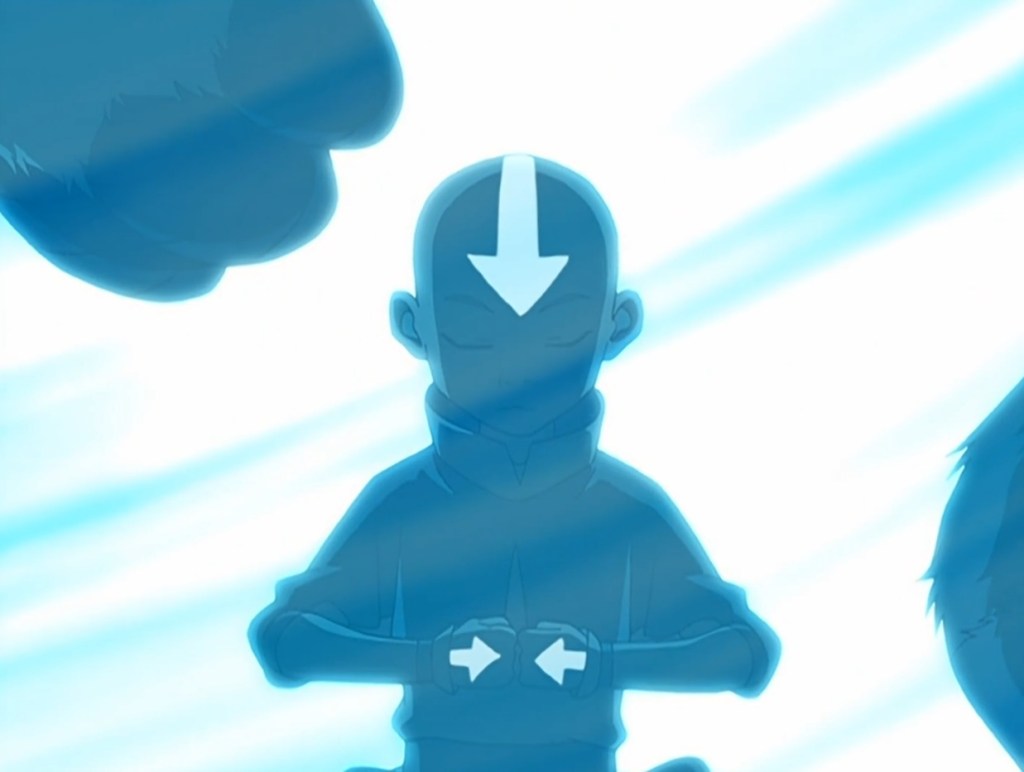
There are a few give ins when you discuss the perfect first episode introduction to a series. Lost, Friday Night Lights, Breaking Bad, etc. I would argue that Avatar: The Last Airbender should be in the same conversation for the most perfect introduction to a series. It’s not about this being the greatest episode in the history of the show (or even the season) but it’s perfect because of how well it establishes the history, lore, tone and characters. The very complex backstory manages to be told in just an extended version of the opening. All the humor is there from the start. Zuko’s character is clear from the start despite none of his backstory being revealed yet. He’s the ultimate mysterious villain who you understand from the first scene. Aang is hiding his identity from the other characters, and although the audience would get who he was, they know nothing about his back story of why he disappeared and ended up in an iceberg for 100 years. That moment where the iceberg breaks open, the beam shoots up into the sky, and then it cuts to Zuko watching it as his first introduction is just perfectly presented and timed.
7 – The Deserter (Episode 16)
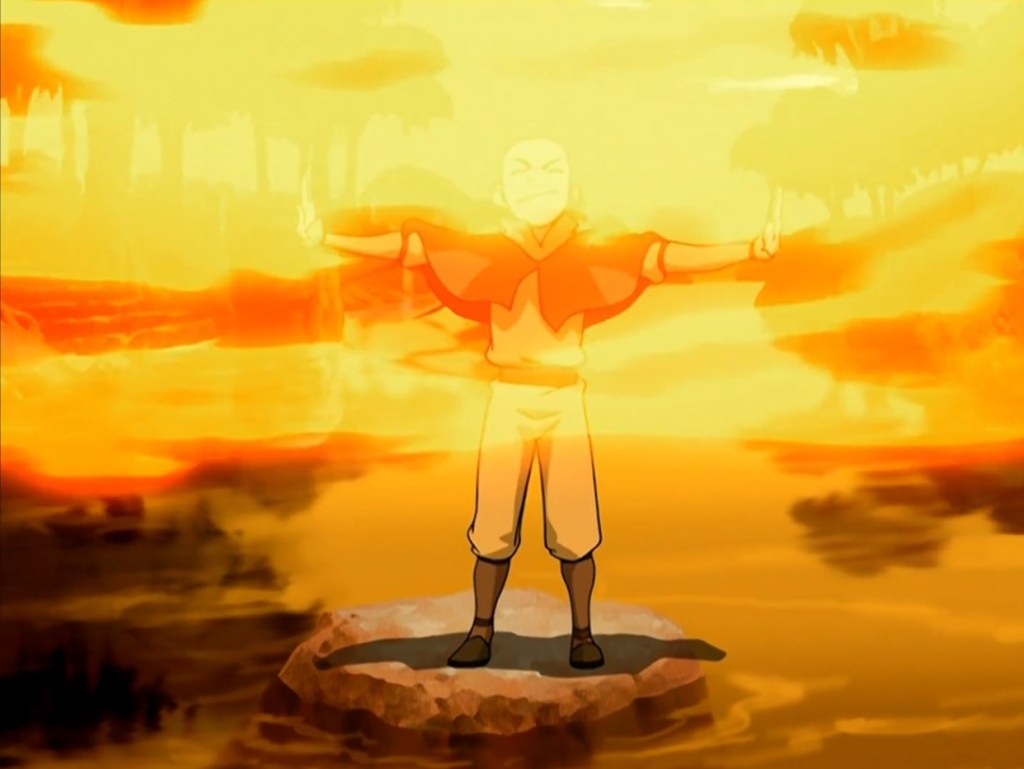
We’re 2 seasons away from the Fire season, but seeing some early skills being introduced does a lot to break the predicted formula of the series. What makes this even better is the focus on Aang being too ambitious, and not having the maturity yet to keep up with his power. It’s not hard to spot that there’s a lot of Star Wars in ‘The Deserter’ with Aang as the young chosen one meeting up with an elderly mentor ‘Luke to Obi-Wan and Yoda’ the master initially not being willing to take him on as a pupil due to not being ready, then being talked into it by a wise spirit (Avatar Roku to Jeong Jeong like Obi-Wan to Yoda). There’s even the connection of the master’s former apprentice turning to the dark side (Zhao as Vader). You don’t expect Zhao to be given any extra context at this point, so I love when the show mixes up its own formula and audience expectations. The character of Jeong Jeong is hands down one of the best introduced throughout the series, so you know they had to bring him back later on.
6 – The Waterbending Master (Episode 18)
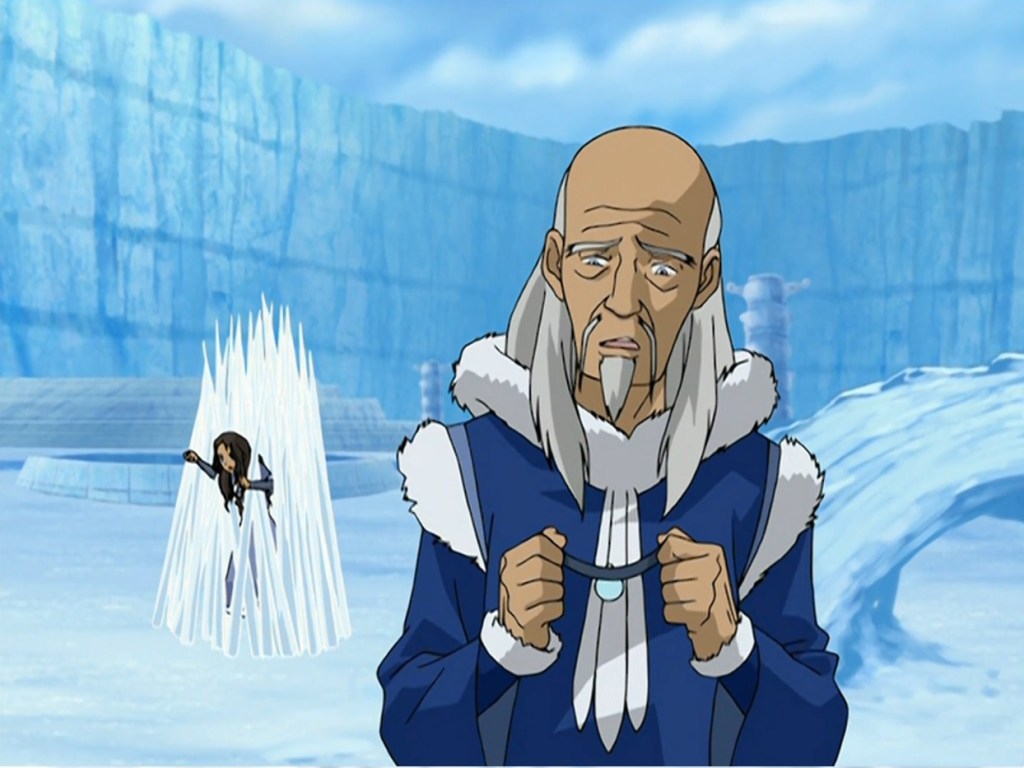
It was a long and patient wait from the first episodes with the Southern Water Tribe to the final 3 episodes with the Northern water tribe. There’s a clear contrast in both the look and the culture of the tribes. Not to mention the northern tribe being far more advanced and organized, but stricter with their customs. Even though the entire season was building towards Aang’s training in Waterbending, it’s actually Sokka and Katara who get more focus in this episode. Sokka’s a tough character to give a storyline too, as he’s the only one with no powers. When you’re this late in the season in a way you want everything to be about powers and action, so I appreciate how they let Sokka’s storyline with Yue build over 3 episodes. All the best stuff here though is from Katara and Pakku. Much like how Jeong Jeong was given an unexpected history in ‘The Deserter’ we get a great twist on Pakku that will put him in a completely different light.
5 – Avatar Roku – Winter Solstice, Part 2 (Episode 8)
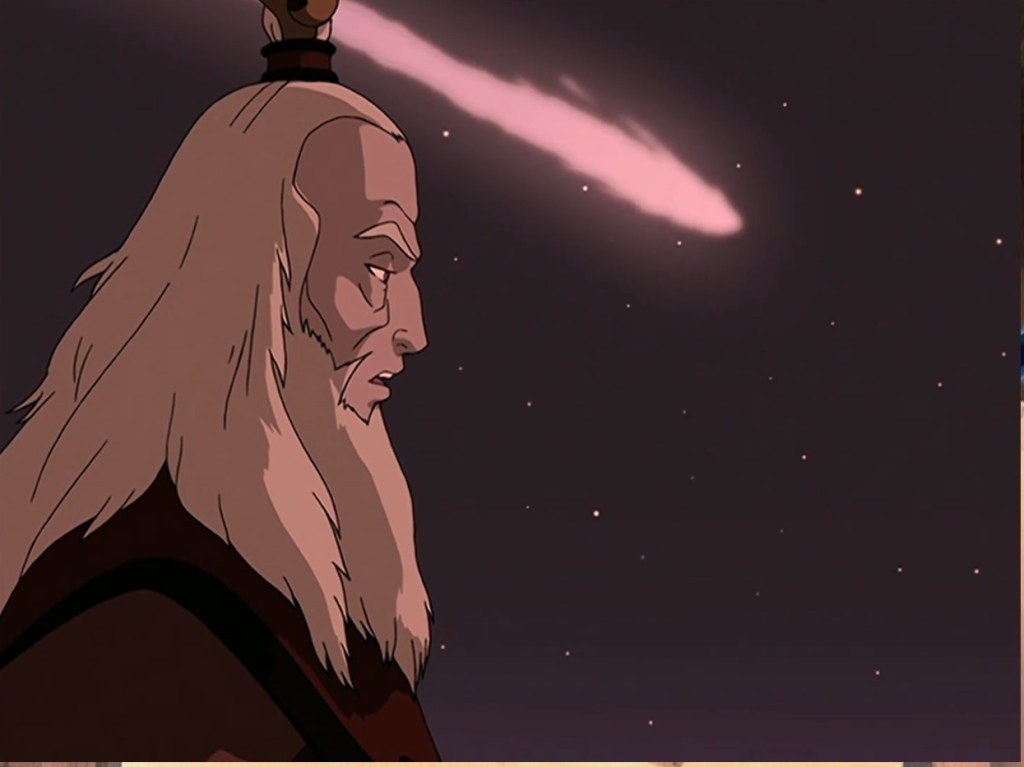
Part 1 introduced the spirit world and setup Avatar Roku’s appearance. Part 2 is where the entire plot of the series is laid out. First you have arguably the best action sequence of the season, with Zhao and Zuko both pursuing Aang. Fireballs are shooting into the sky, Appa is dodging through the clouds, Aang takes on a giant flying fireball head on. Then you get a little Indiana Jones style sequence inside the temple as they try and break in. We even see the first sympathetic Fire Nation character. Finally Avatar Roku appears and sets up the return of Sozin’s Comet, putting a near impossible deadline on everything that has to be accomplished until the end of season 3. The stakes couldn’t have been escalated any more in a single episode.
4 – The Siege of the North, Part 2 (Episode 20)
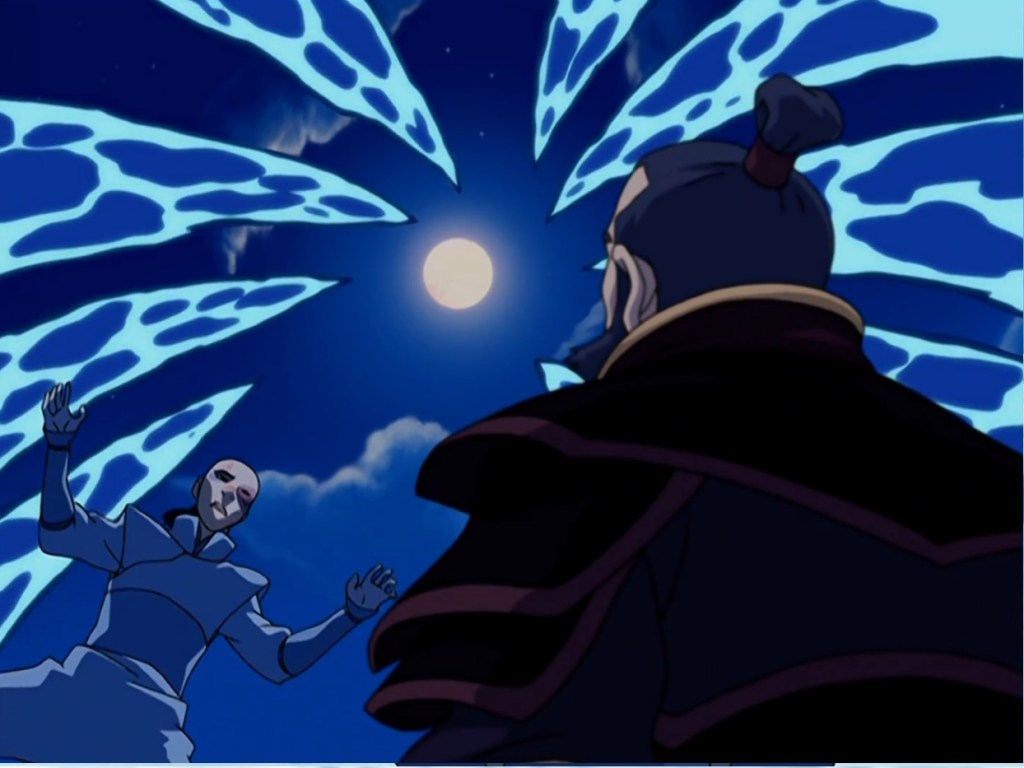
I don’t want to take away too much from Part 2, as it’s incredible in almost every way. My criticism is more pinpointing why I like the first part better. The scenes in the spirit world matter, and they’re just weird and disturbing enough, but I’m not as into the super surreal depiction. Maybe it’s a few too many creatures, or maybe it’s just that I want to get back to the real world battle. One other minor criticism is how quickly Aang gets back into his body. After so much of a big deal being made about how moving Aang’s body would prevent him from returning to the real world, and a large chunk of the episode being Zuko taking Aang’s body as far away as he could, we basically end up with a quick scene of Aang’s spirit going “Hey, where’s my body?” and then floating across the sky and emerging in his body again seconds later. On the very positive side this is the first time we’ve ever been able to see a large scale Lord of the Rings style battle between armies, and it delivers as much as any big movie could. The climax is as perfect as it gets, with Zhao killing the moon, everything going monochrome, chaos erupting in the battle, Yue’s sacrifice, and Aang entering the Avatar state. After a full season of selling how powerful the Avatar can be, when you finally see it happen it blows away all expectations, and plays out as frighteningly powerful. One of the top 5 greatest moments in the entire series.
3 – The Storm (Episode 12)
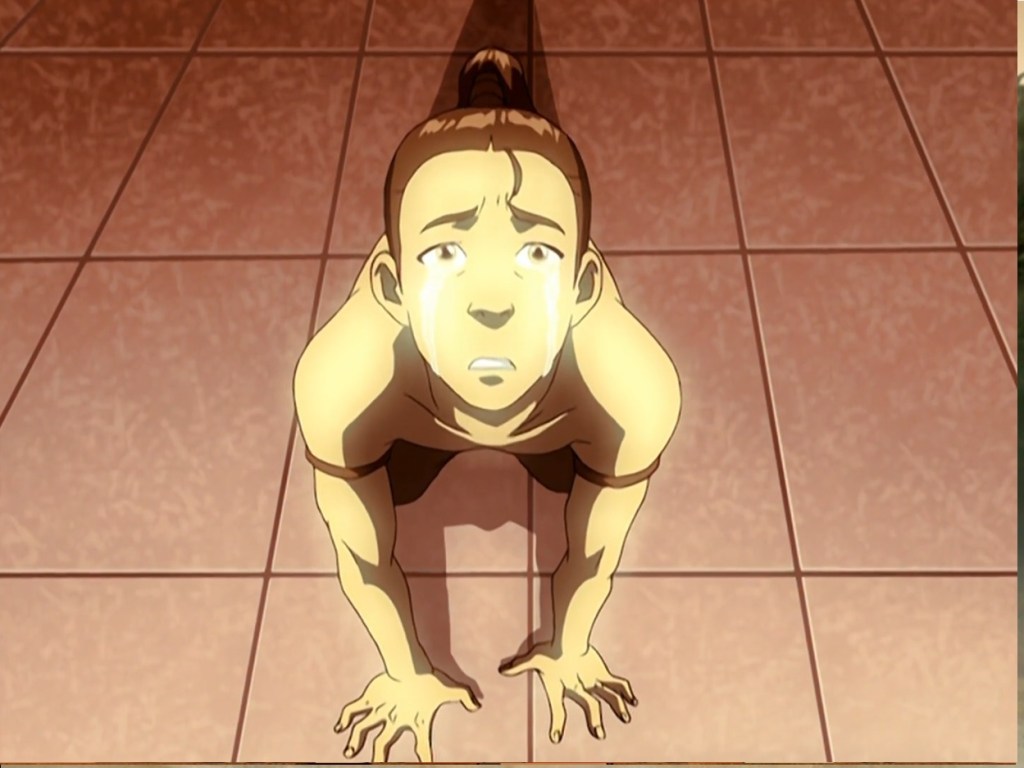
One thing they definitely didn’t do is rush the backstory of Aang and Zuko. Over the first 11 episodes there were moments it was mentioned in passing, but it took patience to wait half way through the season to really show the backstory of the two main characters. Aang’s flashbacks exist to not only explain why he ran away, and how he ended up frozen for 100 years, but more importantly to setup how he was a child rushed into a responsibility that he wasn’t prepared to handle. Zuko’s flashbacks do even more to progress his character than Aang’s, as we’ve only had hints at a sympathetic side to him. In one single flashback he goes from ultimate villain to tragic antihero. What I enjoyed the most was how Zuko’s backstory being told changed his soldier’s entire view of him. And as a fun easter egg we get a single shot glimpse of Azula, my favourite character in the series, which goes to show how much of the entire series was planned out in advance.
2 – The Siege of the North, Part 1 (Episode 19)

The battle itself starts slower in part 1, and is in large part told off camera, with Aang shown battling some Fire Nation ships briefly and then coming back to talk about struggling against many ships. I actually like large parts of the battle not being shown, and this gave a rare chance to develop the characters before the big climax in part 2. Having this follow an intro episode with The Waterbending Master gave even more time to build the individual stories. Sokka in particular shines in his story with Princess Yue. Even though Suki was introduced first, and became the love interest later on, the short 3 episode arc with Yue is much stronger. It also might have been an intentional decision to have Zuko floating more in the background in the episodes leading up this, as that makes it so much more dramatic when he leaves Zhao’s ship and steals Aang while he’s in the Avatar state. The complexity of Zuko’s character is always impressive when you can show one scene with him and Iroh before he leaves, and you genuinely feel for and want to root for him, and then his next scene he’s fighting Katara and you literally despise and fear him.
1 – The Blue Spirit (Episode 13)

This might be one of the most packed episodes in terms of story and development in the entire series. On the surface it seems to be nothing more than another escape from imprisonment, but let’s run down everything this episode features. Katara and Sokka get seriously ill, Aang has to find a cure on his own, Aang gets taken prison by the Fire Nation, the first real plans for an invasion of Ba Sing Se are revealed, Zhao’s obsession with besting Zuko has him at odds with his own comrades, and Zuko’s obsession with besting Zhao has him actually helping Aang. With everything that happens the real brilliance of this episode comes down to only a few seconds long scene, where Aang asks “Do you think we could have been friends?” And Zuko responds without saying a word to more or less communicate “Nope. We’re not going there yet”. Typically if there’s an Avatar episode I love it from the first viewing, but The Blue Spirit might be the one that has grown on me the most with each rewatch.
Coming in a few days is my ranking of Book Two: Earth.

