
Continuing my ranking of every episode from all four seasons of The Legend of Korra. Today are the remaining episodes counted down from 26-1.
26 – The Metal Clan (Season 3, Episode 5)
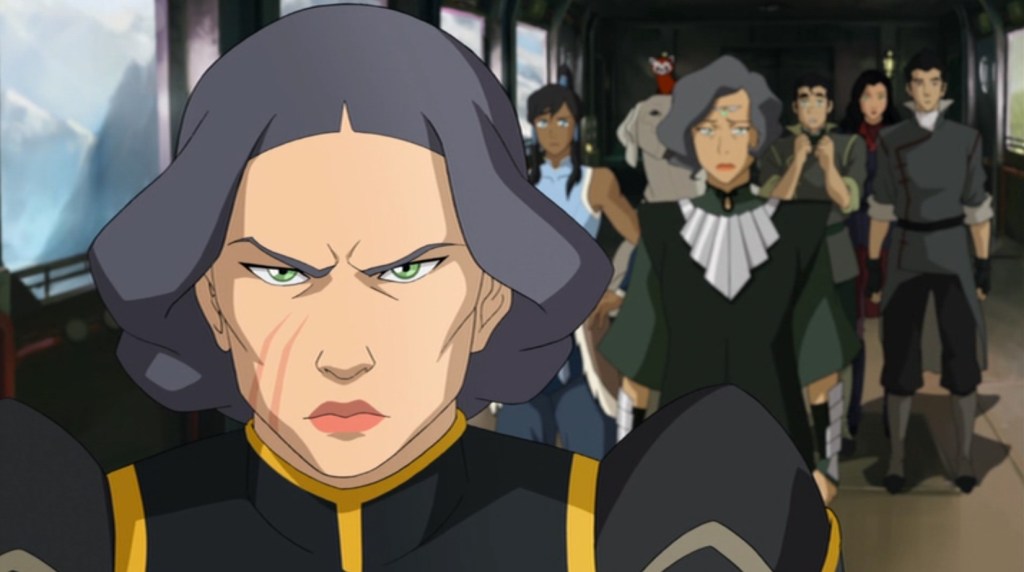
I’m sure I’m not the only one who was starting to doubt at this point in the series whether they would ever be able to develop the side characters that had been there since day one. In the previous episode Bolin and Mako finally got their own personal story. Now Lin Beifong, who really hasn’t had anything memorable to do since the first season, is really given a chance to shine. We get to meet her sister and her niece Opal, who will be a regular going forward. Old characters given purpose, new characters introduced, a brand new environment in Zaofu is showcased, which will more or less become the main location for the rest of the series, and the return of Varrick in only 22 minutes. This episode is light in story, but brilliant in the juggling and development of characters. And there’s still time to cut away to Zaheer sneaking into the Air Temple and having a fight scene with Kya.
25 – The Revelation (Season 1, Episode 3)
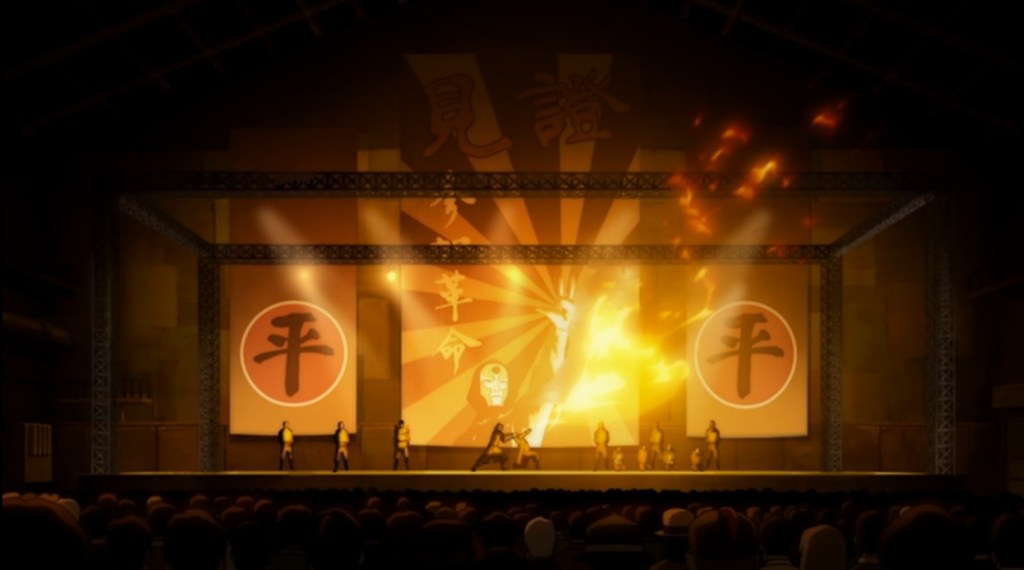
There was definitely a decision made to have the fictional Avatar world more closely match our real world, with the design of Republic City, the organized crime, the 1920s tech. It was a smart decision to wait until episode 3 to really go deep into Republic City, as it allowed the audience to adjust to the new environment designs. They also held off on bringing Amon and the Equalists into this story until pretty much half way into the episode. The best surprise was waiting until there were only a few minutes left to reveal Amon’s master plot with the ability to energy bend. While the episode itself is not terribly exciting until the final Equalists rally, I appreciate the decision to surprise the audience multiple times in an episode that almost seemed structured to mess with their expectations. Make you think it’s a standard filler episode, bring in the villains who have only really been talked about, and then drop the bombshell of the major threat of the season.
24 – In Harm’s Way (Season 3, Episode 4)
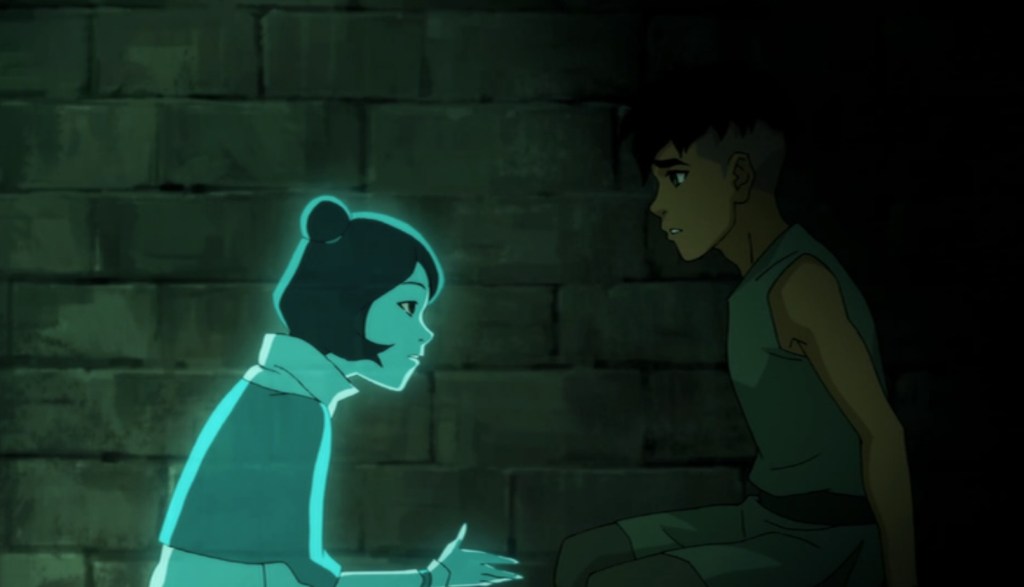
At only 4 episodes, this is officially the longest wait in the series before having Korra herself face the main villain. At this point she’s still not even aware of his presence until it’s told 2nd hand to her by Tenzin and Lin. I love the unexpected backstory of Zaheer having been involved in a kidnapping attempt on Korra when she was a child, and her having no knowledge of it. They also complicate the situation by having Tenzin and Lin’s decision to imprison him and his associates for 13 years in a slightly unethical way. Zaheer could not have been setup better as a villain. The main story of Kai being kidnapped with a bunch of other airbending orphans to serve the Earth Queen works really well. In the end you do kind of question how it’s that much better to have Tenzin recruit them all to join him, but offering the choice as opposed to enslaving them is different. It’s a tiny detail with the same results that perfectly separates Tenzin from the Earth Queen.
23 – Korra Alone (Season 4, Episode 2)
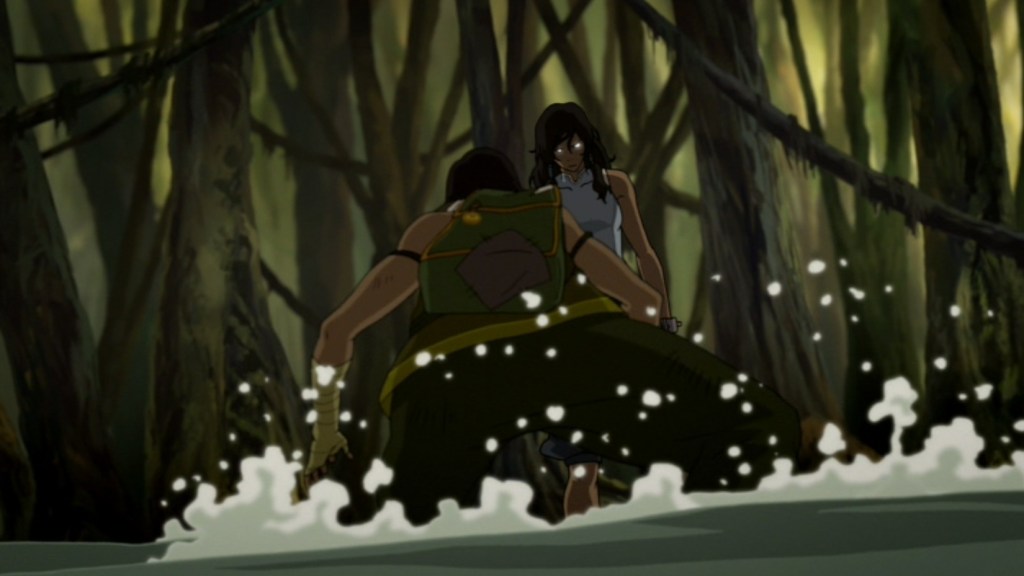
Taking a bit of inspiration from The Last Airbender’s highly acclaimed Zuko Alone, but more in title than story content. If anything the story content is borrow more from Appa’s Lost Days, with it filling in all the gaps of Korra’s story from the end of season 3 to the start of season 4. I’ve always appreciated how the show allows Korra to be weak and flawed, and this is the weakest and most flawed she would ever be. I’m not as enamored with this episode as a lot of fans are, in part because I don’t think any of Korra’s “adventures” reach the dramatic heights of the opening scenes with her recovering back home and having to learn to walk again. The surreal haunting of herself is a very good touch that keeps this from just being a collection of events over 3 years. I want to add that Korra’s PTSD is maybe my favourite character arc of the whole series, but I view the ongoing story as being better than any individual episode.
22 – Peacekeepers (Season 2, Episode 5)
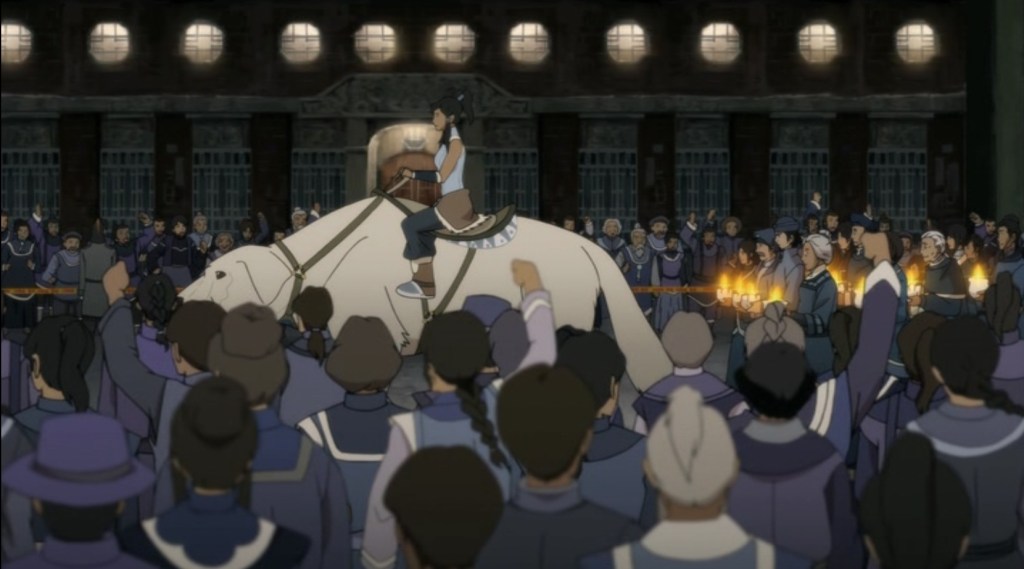
Normally it’s a bad thing if you have a heavy story followed by a light comical one, but there are a few differences that help this one work. For one, the setup of the invasion was rather dull, so I appreciated the energy and humour here. There are also some interesting angles explored such as the politics of Korra not being able to maintain her public persona as an impartial Avatar, and the sub plot with Varrick and Bolin creating propaganda films. The Last Airbender briefly explored how public opinion didn’t necessarily match the real events of a war, but The Legend of Korra takes it so much further. The opening 4 episodes did little to create intrigue around the invasion, and yet this does more just by looking at the events from a completely different angle. I’m also thankful the Korra and Mako relationship has ended, and not just because I couldn’t care less, but because the disagreements between them and their roles as the war progresses is much more interesting.
21 – The Battle of Zaofu (Season 4, Episode 6)
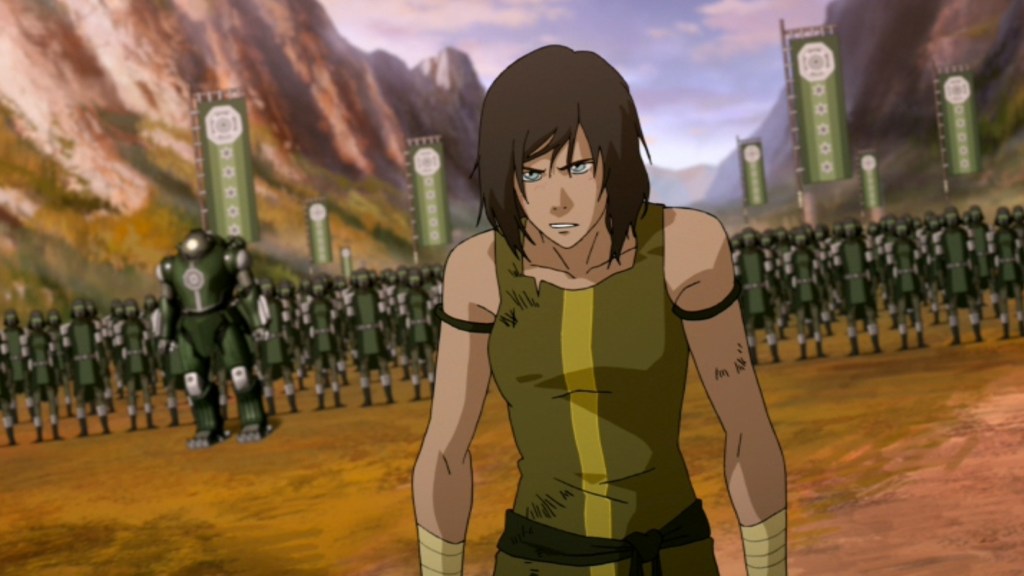
The title might lead some to believe there would be a massive ground battle to reclaim Zaofu after Kuvira claimed it in the previous episode, but in actuality it’s more the battle for control between Kuvira and Su with Korra in the middle as the mediator. I love that they still keep Kuvira in a bit of a grey area. The audience can tell she’s the evil one, but from the POV of the other characters, Su might be in the wrong and Kuvira within her rights. I’ve said it many times, but Korra works so well as a hero because she’s constantly outmatched by her villains. In this case we never really got to see Kuvira’s rise to power in the 3 year gap between seasons, and we’ve seen plenty about how physically and mentally weakened Korra still is. I also really enjoy Bolin and Varrick being imprisoned together and forced to build a WMD out of the spirit vines. It’s a very heavy twist delivered by the two comic relief characters.
20 – Rebirth (Season 3, Episode 2)
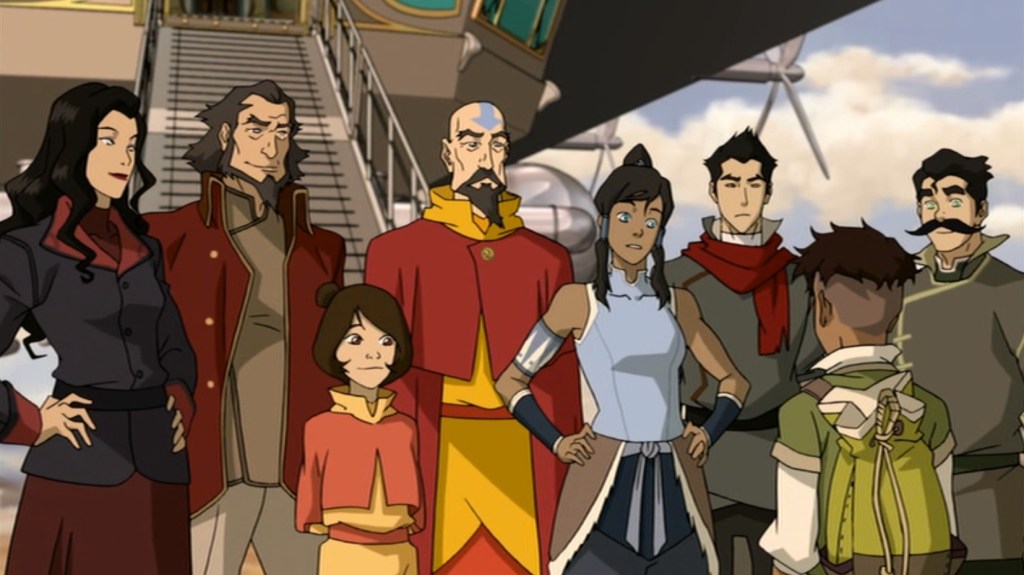
Over both series there is so much focus on airbending that it’s easy to forget there are literally only 4 airbenders in the entire world, with Korra being new to it and two others being children. Having an episode on the road trying to recruit Airbenders is a great idea, and it plays on the comedy so well with everyone turning them down. Bolin staging a sideshow like display of airbending to try and recruit is hilarious, and how it transitions into the sad story of Kai the orphan joining them seamlessly transitions. It was a risk to introduce a new main character at this point in the show, as between Tenzin’s family and Korra’s team there are already so many characters, but Kai was a great and unexpected addition. Zaheer’s development as the villain slowly recruiting a rival team of villains sets the story for the season on the right track. It’s not as rushed and uneven as Unalaq’s in season 2. I feel like the writers learned the lesson from the previous seasons to take their time with the villain and hold off on Korra’s involvement with him.
19 – Operation Beifong (Season 4, Episode 10)
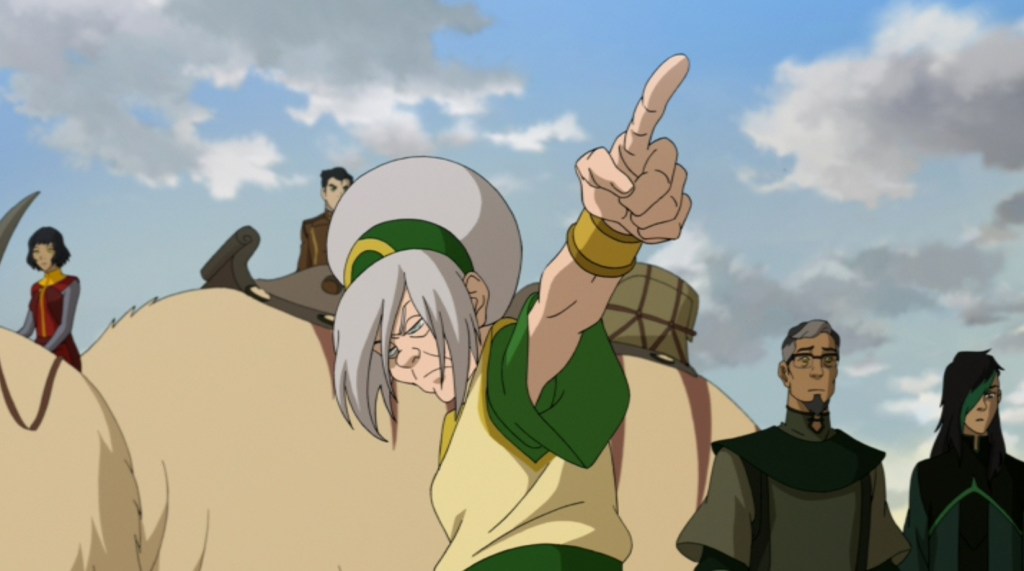
I really do enjoy Toph’s return. Of all the characters from The Last Airbender she is the only one who has a real role and purpose. It helps that both of her daughters were built as characters on their own long before she came back. I will also call out this as another example of fans giving far too much praise to an episode just because they see a legacy character show up. The family drama between Toph and Lin is solid. The battle scene against Kuvira’s forces is solid. My complaint is that the biggest twist in terms of story, Zhu Li being revealed as a mole/spy and working to sabotage Kuvira’s WMD falls very flat. The weapons should be a much bigger threat than it is played out to be here, and even though Zhu Li is a minor character, her working with Kuvira in the first place is part of a much larger story thread of Kuvira’s influence in turning people. To reveal that someone we thought had betrayed the heroes was actually working undercover the whole time should be one of the big moments of the season. It just plays like a bit of an afterthought.
18 – Night of a Thousand Stars (Season 2, Episode 11)
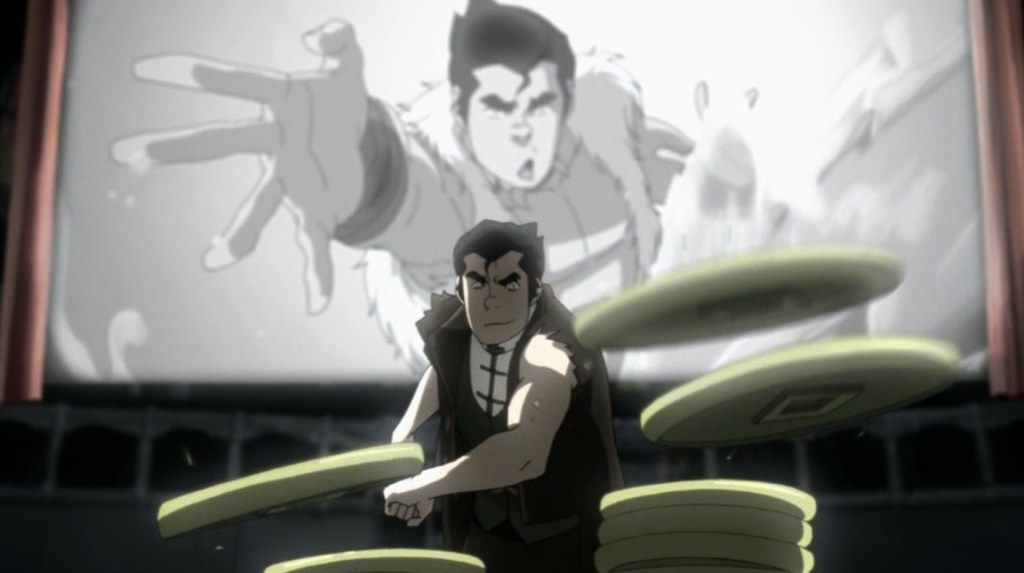
The most unexpected good plot twist of the season is Jinora being separated from her body. I wouldn’t have expected any of the kids to actually bring good drama to the show, and it allows for Tenzin to have a real storyline of his own. I’ve already said how I love Bolin and Varrick’s war propaganda movie serials. It fits the time period they’re trying to emulate, and it allows Bolin to show some personality without it being 100% comic relief. Bringing the plot to kidnap the President into the story was very needed at this point in the season. I’m sure some would complain the episode is too light, with Bolin basically acting out his movie character persona to rescue the President, but this season as a whole is so serious and dark that I appreciate the lightness. And I definitely appreciate Bolin’s action hero side plot more than his side plot with his fiance from earlier in the season. The way the fight scene plays out almost identically to the movie playing in the background is fantastic. Then there’s the Pro-bending commentator calling the fight from his seat. For a light episode, this sequence might be the most expertly staged and cut of any in the series.
17 – Light in the Dark (Season 2, Episode 14)
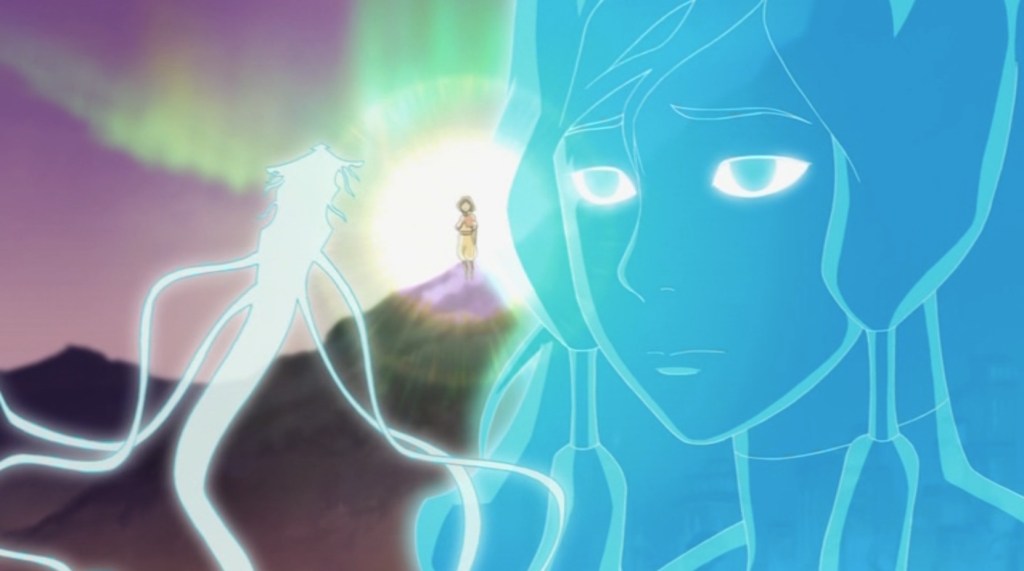
Unalaq, the most underwhelming villain of the series, goes full kaiju as a giant spirit monster destroying Republic City. Then after Korra seemingly lost her Avatar powers, she just as quickly gets them back and turns into a giant glowing Korra monster. Giant glowing Korra and giant Unalaq/Vaatu monsters do battle Godzilla style. The finale is epic in scale, the action is phenomenal, and the visuals are probably the best of the series so far. Korra gets to be an underdog and have a huge heroic moment. The downside is we finished the first season with Korra seeming to lose her bending powers completely, and then just as quickly get them back. One season later we’re ending with Korra losing her Avatar abilities and just as quickly getting them back. It doesn’t have the same effect when its done in every finale. With Korra being the main focus of attention we thankfully have a really great moment with Jinora coming in for the save in the fight. One of the best things about the season was the surprise of having the most unlikely character turn out to be so pivotal.
16 – Endgame (Season 1, Episode 12)
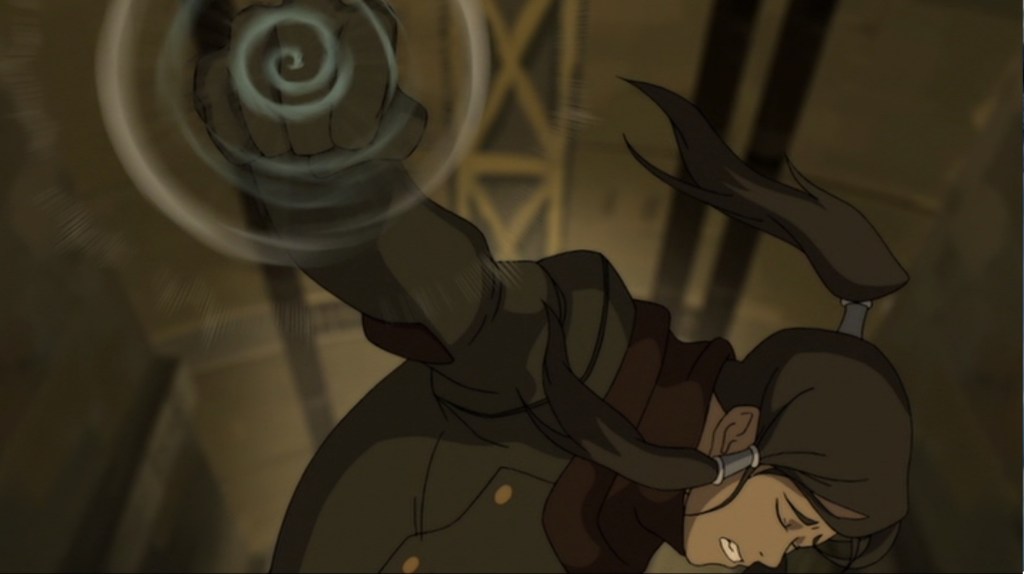
Even though there’s still the WW1 style battle scenes with Bolin, Asami and Iroh, I find it refreshing that Korra’s main goal isn’t to fight at all, but just to expose Amon to his own followers. And when the fight starts with Amon she again stands no chance against him. Three meetings between Amon and Korra throughout the season, and the odds are stacked against her further when it seems Amon takes her bending away, then out of nowhere she finally airbends. This is the equivalent of when Aang went into the Avatar state at the end of season 1 of The Last Airbender. Despite the one heroic moment for Korra, the final fight between Amon and Korra climaxes with Amon’s followers turning on him. While part of me would have loved to see a bigger final fight, I get why it works better dramatically to keep Korra as a weaker hero, with 3 of her 4 bending abilities being taken.
15 – When Extremes Meet (Season 1, Episode 8)
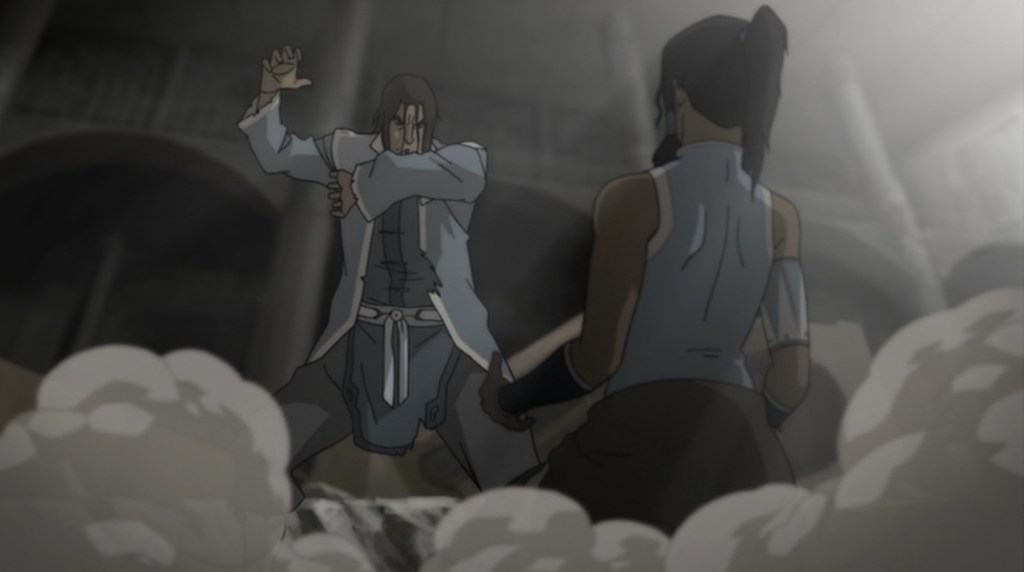
Looking back on the series on a rewatch I do kind of laugh at the formation of “Team Avatar” as they really never do anything with those four characters as a group. This was a great start to Korra, Asami, Mako and Bolin as a team, with a car chase featuring fight scenes on top of moving vehicles. The season long story gets a little more complicated as Tarllok becomes a clearer villain. He assumes authoritarian political power and starts oppressing and arresting people. Even though it was clear throughout the season that Tarrlok would be a villain, it was great to have the show bide their time in a real turn, and even better that he represents the other side of the main villain Amon. Episode 1 introduced the idea of the Republic being out of balance, but I think audience are conditioned to thinking there can only be one good side and one bad side. Surprisingly 8 episodes in you get the great twist of what you thought was the “good side” being just as corrupt and discriminative.
14 – Harmonic Convergence (Season 2, Episode 12)
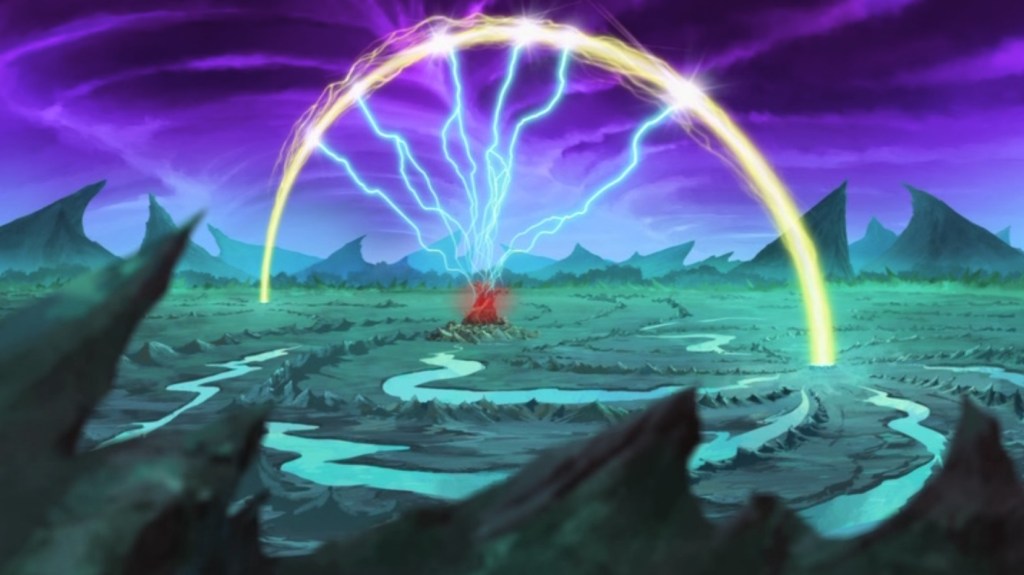
This is what we waited all season for. A storyline paying off, a lot of action, every character coming together and being given something decent to do, especially the twins Desna and Eska, who up until now only seemed to be quirky henchwoman/henchmen. Suddenly they have a bit of a dramatic arc with the dilemma of whether they believe in following Unalaq’s plan. Then there’s Bumi, who has mostly been comic relief, and after being dismissed by Tenzin (again) gets to save the day in a way that’s both amusing and heroic. I’m willing to bet some people are bothered by the war between the north and the south happening almost exclusively off camera, but that’s actually one of the things I like about this season. The civil war is just a backdrop for Unalaq’s bigger plan of releasing Vaatu from the spirit world, so I’m all for keeping the background war a bit of a mystery and giving us an epic spirit world climax. And thankfully there are no funny or cute spirit animals taking away the mystery and tension this time. It’s a dark and bizarre climax in the best way.
13 – Beginnings Part 2 (Season 2, Episode 8)
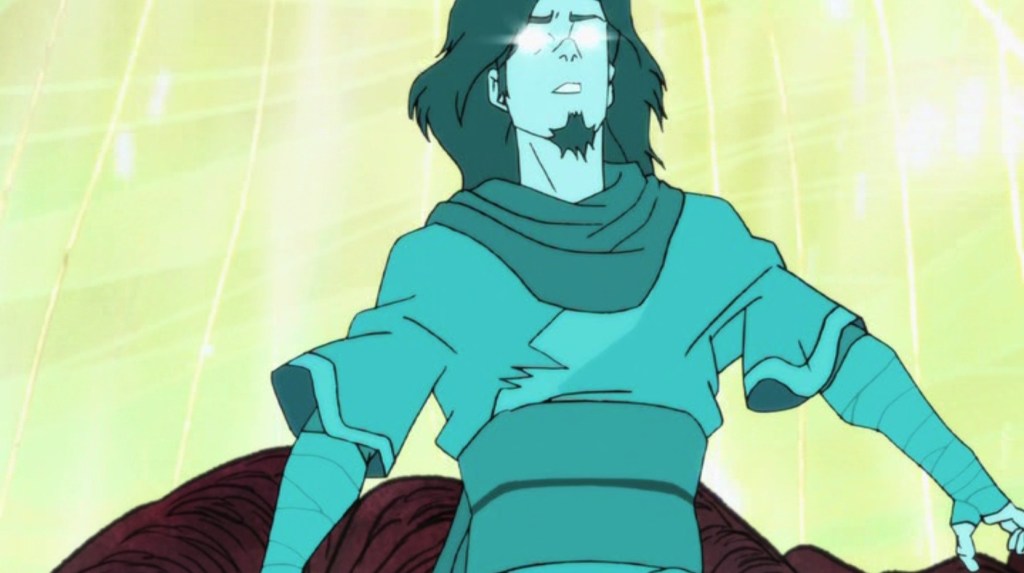
I wasn’t a huge fan of the first part of Beginnings. Although it’s interesting to see the origin of the first Avatar, I didn’t like how the mystery of the spirits was stripped away, and the randomness of events. Within a minute part 2 makes up for this. It creates the conflict of the light and dark spirits being out of balance, with Wan being the cause of it. This actually ties it into Korra’s story of unknowingly creating the civil war between the north and south. How Wan became the first to wield multiple elements made this more of a mythology story than just a backstory. The drama is increased compared to the light almost comical tone of part 1. And just when you think the backstory is only there to fill out an episode count, the harmonic convergence is introduced, which adds a lot to the overall threat of the season. It’s not at the level of The Last Airbender’s ‘The Avatar and the Firelord’, but it’s a more than solid story that starts to redeem the very uneven and sometime dull season.
12 – The Last Stand (Season 4, Episode 13)
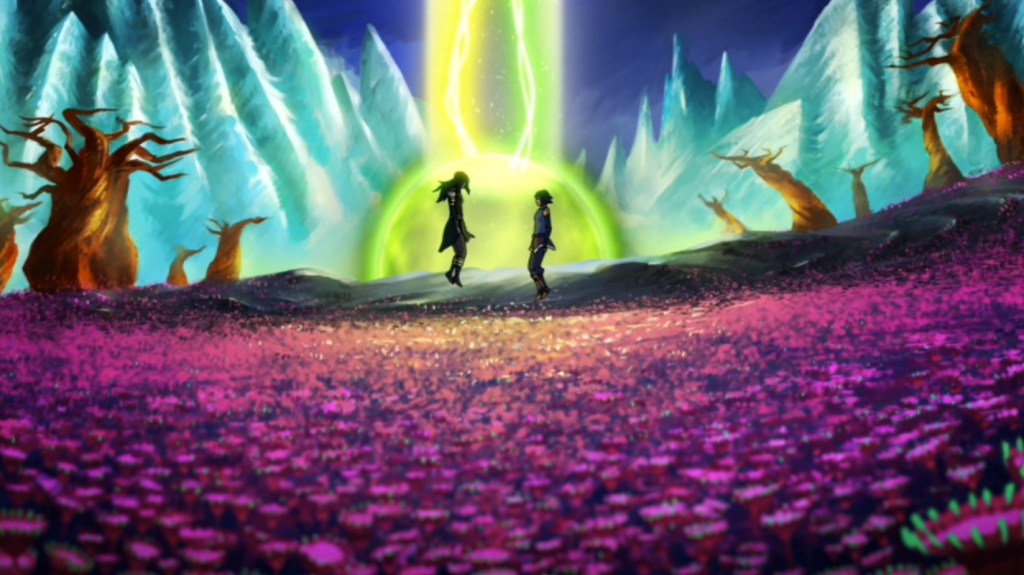
In some ways I view this as the most successful finale of The Legend of Korra because it’s finally not about Korra not having learned enough, not being strong enough, or not knowing how to stop a villain. The show never even made a big deal about it, but Korra just emerges as a fully capable Avatar here, and by not having her struggling to defeat a villain, the episode is way more unpredictable. Korra’s struggle is against the weapon itself, which kind of comes out of left field when Kuvira is beaten. The 2nd half playing out in the spirit world gives the series a much calmer way to go out on than past seasons. I still don’t think Kuvira was developed nearly well enough, but the final scene between them finally gives Kuvira some proper context. It was nice to not throw too many epilogue scenes in for every character. We mostly get the wedding between Zhu Li and Varrick and then Korra’s final scenes with Tenzin, Mako and Asami. There’s a lot of talk on the Korra and Asami relationship at the end of the series, and it’s been commented on that the creators wanted to have Korra and Asami end up in a relationship in the end. What we get is more vague that could be just as easily interpreted as a final scene between friends. Personally I don’t think it works great either way, because even as friends Korra and Asami have never been written well as a duo. To be honest they were barely ever written at all. Seeing as this series was never mapped out as one long story the way The Last Airbender was, all things considered it’s quite impressive how well it wraps up on the themes of the show.
11 – The Old Wounds (Season 3, Episode 6)
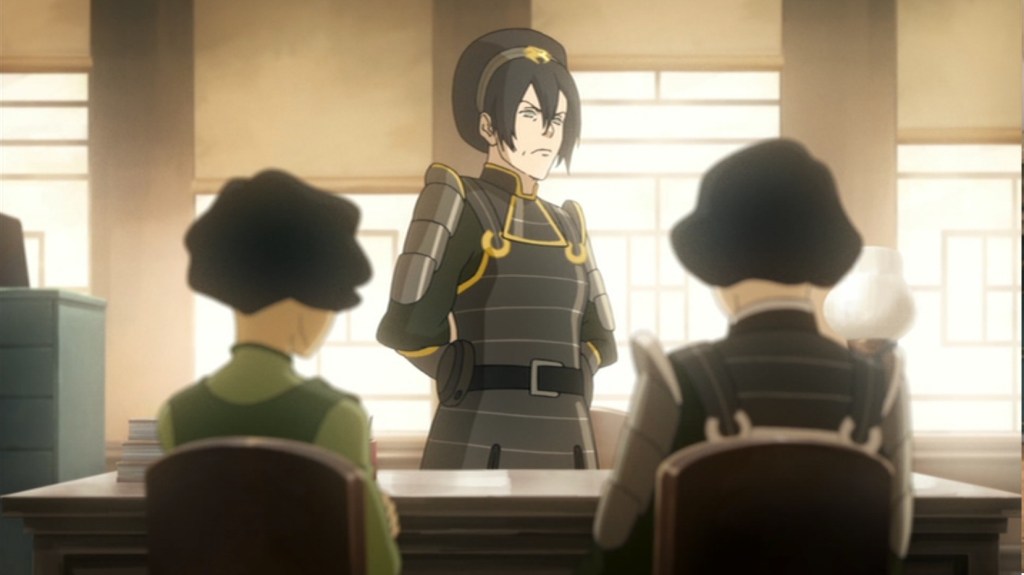
I can’t say enough good things about this episode. Giving Lin her own storyline was long overdue, and here we have the 2nd episode in a row dealing with her estranged sister Su and niece Opal. They could have gotten away with just the one episode and kept it vague, but instead we have flashbacks to how their relationship deteriorated in the first place. Both characters are presented as being flawed, with Suyin being immature, rebellious and on a dangerous path, and Lin shown as having too strong of a sense of justice and being willing to sacrifice her sister almost to make a point. Through this we also get to see how it costs Toph in the long run, yet it’s never presented as a tragic story. The scrappy fight scene between the sisters is funny. On the side plot Korra and Bolin’s studying of metal bending could have probably carried an episode on its own, but the Beifong family drama is the real appeal.
10 – And the Winner Is… (Season 1, Episode 6)
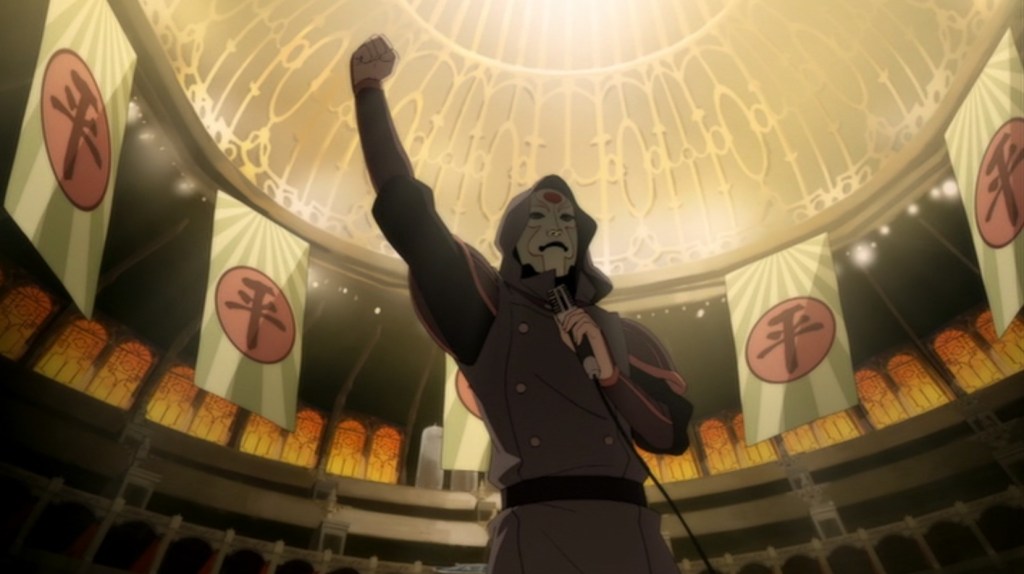
The Pro-Bending tournament dominated a little too much of the first half of the season, butin the end they found a way to bring the bigger storyline together. Amon’s threat to halt the tournament finals introduces the political element, with the council debating whether to give in to Amon. It’s the whole “Do you negotiate with terrorists” dilemma that is more mature than you would expect in the previous series. After several episodes focusing on the teen drama, we finally get a bit of adult drama between Tenzin and Lin Beifong. Despite not being a big fan of the Pro-Bending game, or moreso the show’s overuse of it, by adding the referee corruption it’s actually fairly exciting to watch. It’s really Amon and the Equalists taking over the venue that really picks up the pace and tension. The show doesn’t shy away from portraying Amon as a serious terrorist and cult leader, and the scenes of their attack are genuinely unsettling to watch. The fight scenes on the dome really show off Korra and Lin as the superheroes they are.
9 – Darkness Falls (Season 2, Episode 13)
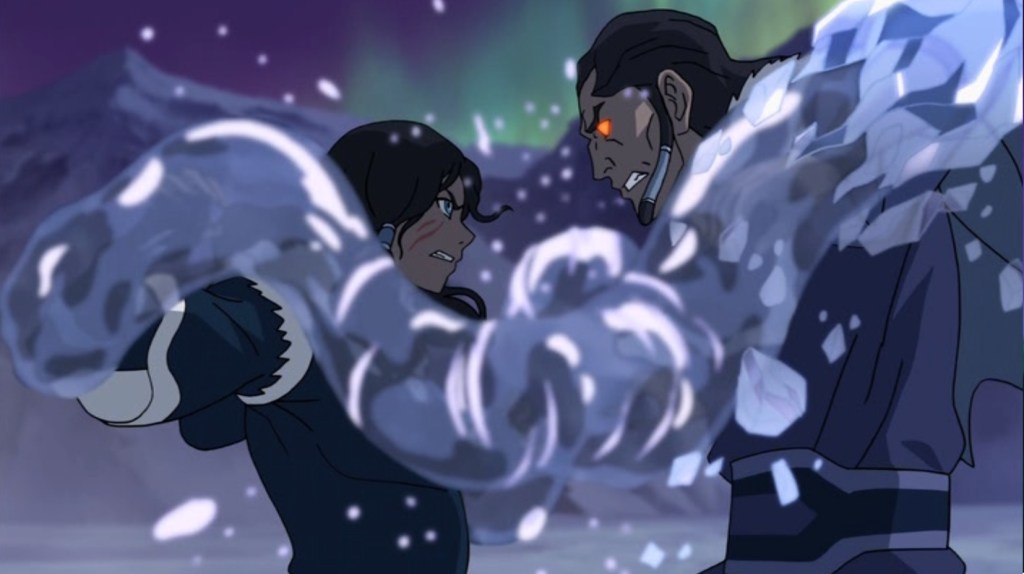
Unalaq’s plan was never fully developed from the beginning, and that was in part by design to keep twists going, but there’s one moment early on where Korra mentions having to stop Unalaq from merging with Vaatu, as that would make him a dark Avatar. I know there was a brief mention of this previously, but why was this not made the primary focus of the last few episodes of the season? This is by far the biggest threat in either series, and I feel like its treated as a bit of an after thought. Credit to this episode that it really handles that threat well. Unless you really pay attention throughout the first 2 seasons it is easy to forget that Korra has never really been involved in a major battle. In season 1 she had only 1 big airbending moment against Amon, and she has spent most of the second season exploring the spirit world. This is really her only big fight, and she’s in battle with someone more powerful than Aang faced. Speaking of Aang, we also get his best re-appearance on this series as he briefly appears before Tenzin. The Tenzin plots throughout the season with his sister Kya and brother Bumi were entertaining enough, but there was little emotional weight to it until now. Tenzin’s character had some subtle doubts thrown on him between losing Jinora, some mentions of having the burden of carrying Aang’s legacy, and not having ever mastered entering the spirit world. Even though it was subtle building, all three came together in just a quick exchange with Aang in the spirit world.
8 – The Day of Colossus (Season 4, Episode 13)
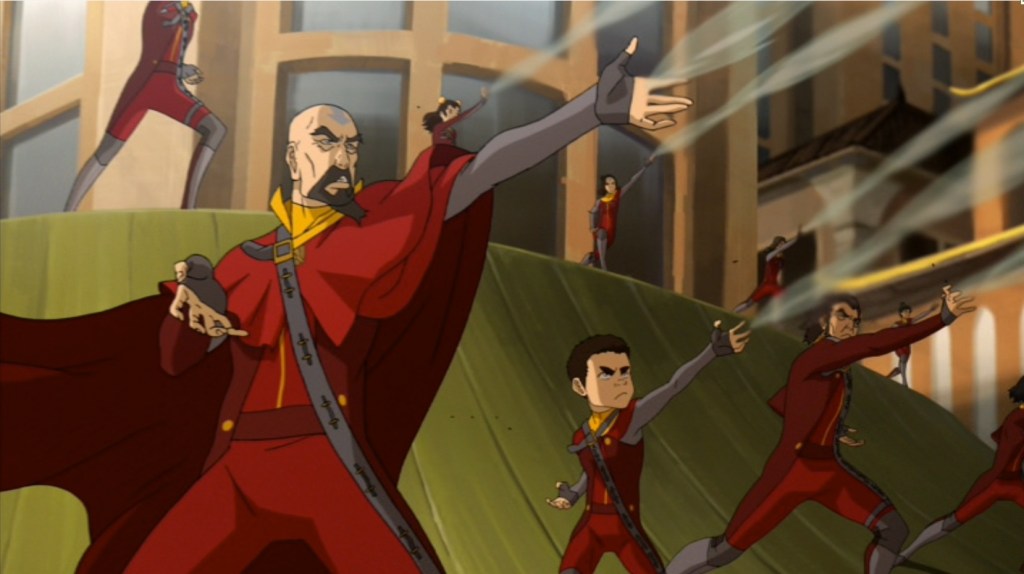
Season 4 was not necessarily slow for me, just a little underwhelming at times. The story really picked up in the previous episode, and immediately this manages to course correct all the issues I had up until then. Keeping the show away from Republic City for so long is one of the things that makes the battle scene so epic. Since Korra never had a personal issue with Kuvira, this is a rare time when everyone else in the cast is given a chance to shine. What makes it so enjoyable to see all the hero characters divide up is that this is the first time in either series that it hadn’t been about The Avatar being the only one who can stop the villain. You have all the adult, young adult and child characters who can more than hold their own. It’s like the first assembly of superheroes in the Avatar universe. When Asami’s father Hiroshi reappears I remember initially thinking he was too far removed from his brief storyline in season 1 to make for anything memorable, but surprisingly he ends up getting one of the better redemption arcs in the franchise. While the cast of characters in this series can be a little bloated sometimes, its a real credit to the writers how they managed to make so many minor characters stand out, especially in the final season.
7 – Venom of the Red Lotus (Season 3, Episode 13)
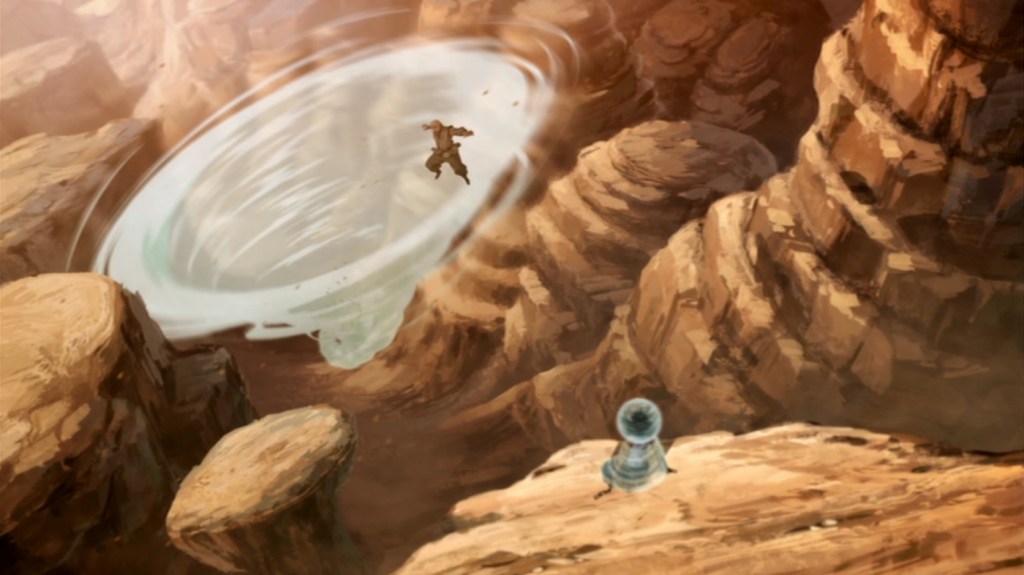
This is possibly the most popular episode of The Legend of Korra, so let me start off with my one real complaint. The final threat of Zaheer is to poison Korra, force her into the Avatar state and basically end the Avatar cycle, making her the final Avatar. This is very similar to what happens in the season 2 finale. So the last 2 finales have used slightly recycled ideas from the previous finale. Now the previous 2 seasons actually had her lose her bending abilities, and break the Avatar cycle only to reverse it right away. This time Zaheer never does succeed, but just seriously weakens Korra, which makes for a more exciting battle. The fight scene also includes a lot of flying, which is a bit of a throwback to the final battle between Aang and Ozai in The Last Airbender. On top of that there are simultaneous battles between the supporting characters on each side, also like The Last Airbender finale. The whole season was really about restoring the Air Nation which is currently made up of a bunch of amateur students. This gives Tenzin and the other Airbenders one big moment together to highlight how this is the first time multiple Airbenders have been together in hundreds of years. It’s probably the one moment from the series that can still give me goosebumps. It’s like an “Avengers Assemble” moment, but with all inexperienced kids really getting to use their powers for the first time. The most epic end to any battle outside of the final fight in The Last Airbender.
6 – Skeletons in the Closet (Season 1, Episode 11)
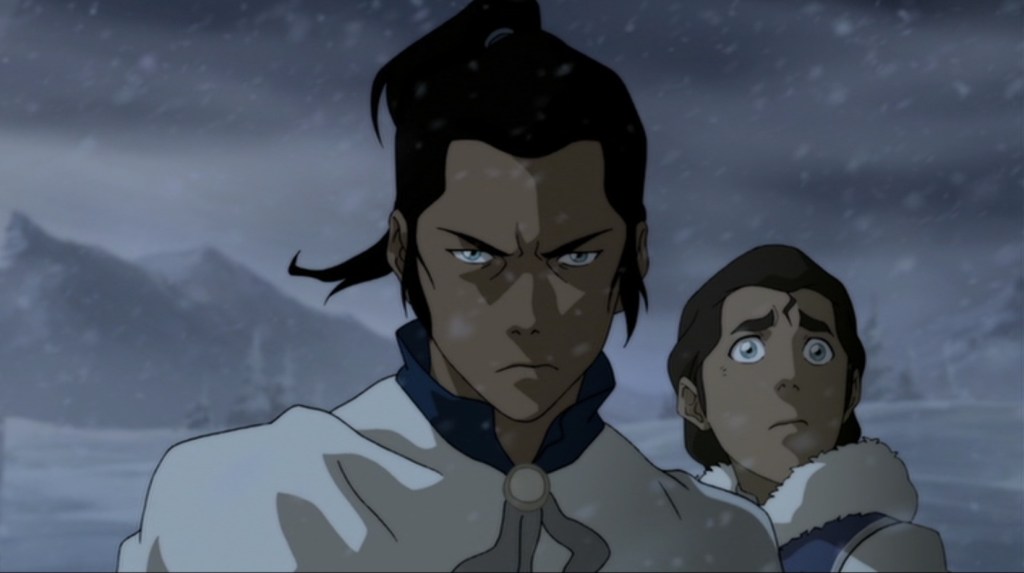
The best surprise appearance of the season is Zuko’s grandson Iroh, and its especially exciting to have him voiced by Dante Brasco, the original voice of Zuko. The action in this episode is the best of the season, and they really get to do something different visually with the 1920s tech like bi-planes dropping bombs on boats. After a full season of not living up to the Avatar level strength, Korra is shown as powerful as she’s been all season. Amon and Tarrlok’s backstory is revealed, which is made better since the show never gave the impression there would be anything more to either character than just being opposing villains. It also ties into the earlier flashbacks involving Aang. There’s a risk of losing the mystery and menace of a villain when little has been revealed before now, especially when a villain is as mysterious as Amon has been, but this enhances him multiple times over. This backstory actually makes him scarier as a villain, because the ending of the Tarrlok and Amon back story gets very dark and sinister. It’s the type of maturity in storytelling that wouldn’t have been possible in The Last Airbender.
5 – The Ultimatum (Season 3, Episode 11)
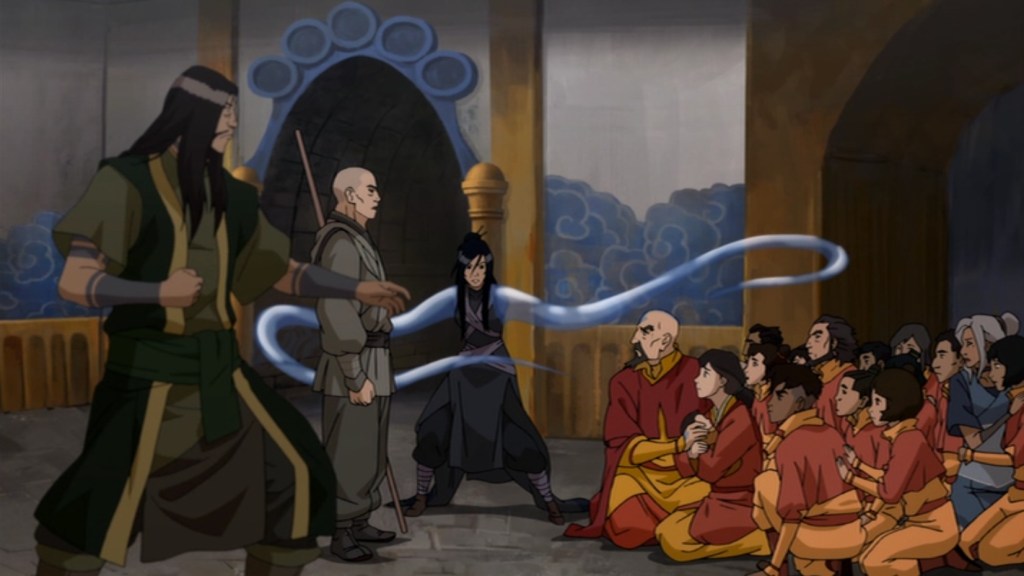
What a great decision to pickup with Mako and Bolin immediately after the end of the previous episode with Ba Sing Se in full riot mode. It’s such a chaotic start to the episode, and letting Mako and Bolin be in the middle of it lends an extra level as chaos. They had previously been reunited with their estranged family and now have the dilemma of helping them escape while still under the urgency to get to Korra. There’s another spirit world meeting with Uncle Iroh, and Korra has a conversation with Zuko from The Last Airbender regarding how Aang would have handled the crisis. Some of the appearances of The Last Airbender characters comes across as nothing more than fan service to me, but this one genuinely works to develop Korra as a character. The episode’s 2nd half is maybe the best of the series up to this point, with Zaheer storming the Air Temple, taking the new Airbenders hostage, followed by a huge multi person fight scene between Tenzin and gang vs Zaheer and gang. The music alone for these scenes makes it the moment of the series. Kai is given a massive heroic moment in this episode that actually had me questioning whether they were prepared to kill off a young character for the first time. This is nothing compared to the heroic stand Tenzin takes as he’s beaten as aggressively as anyone has been in either series of the franchise.
4 – Kuvira’s Gambit (Season 4, Episode 11)
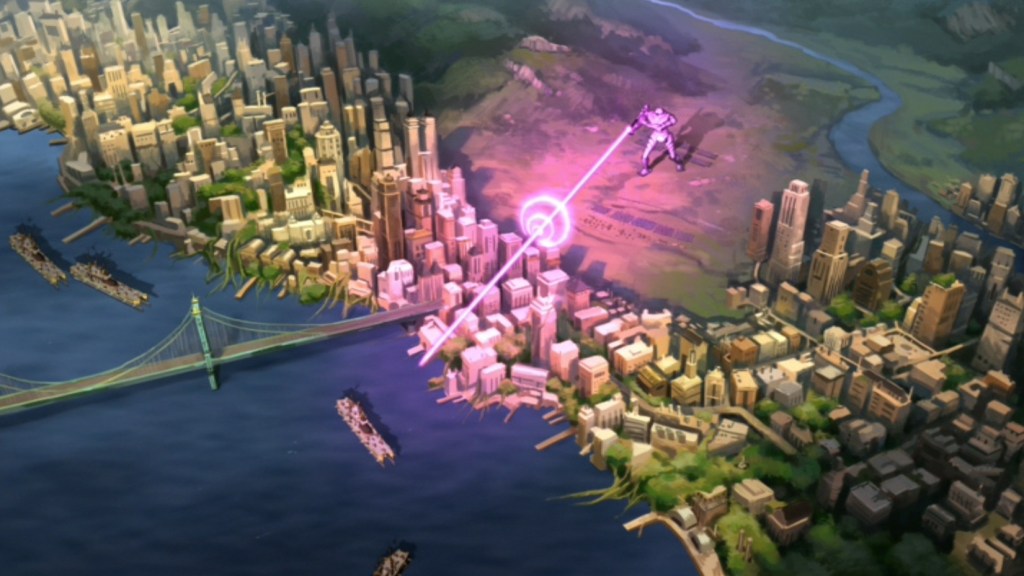
The brilliance of this episode is in how it messes with the audience’s expectations. We’re flat out told that there’s a massive threat with Kuvira’s super weapon heading for Republic City, and we’re given a timeline of 2 weeks. We’re accustomed to the 3rd last episode being the setup to the big finale. Then just when the audience thinks this will be the calm before the storm, out of nowhere everything is escalated to immediate, not two weeks. There are also some great scenes that play on real life situations from the World Wars. The evacuation of a city. Surrender negotiations. There have also been so many major characters the show dropped the ball with, or failed to ever make interesting, so I never expected that they could make a minor one like Bataar such a pivotal and emotionally satisfying character. One episode perfectly sells his indoctrination, his obsession and dedication with Kuvira, and the heartbreak you suddenly feel for him when Kuvira cold heartedly turns her weapon on him is genuine. The same goes for Prince Wu. He was at best a like him/indifferent toward him buffoon type of comic relief, and in one scene where he calms and directs his people during the evacuation orders I’m instantly invested in the guy. Now 4 seasons in why is it still so hard to make Mako and Asami interesting?
3 – Turning the Tides (Season 1, Episode 10)
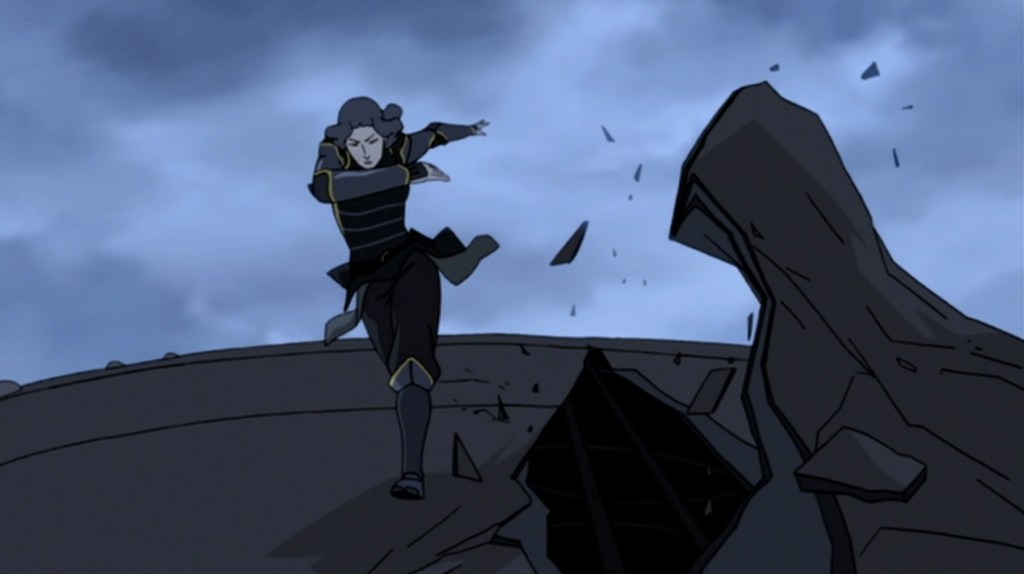
One of the little details I appreciate in this series is knowing when to show the big action and when not to. Amon and the Equalists seize control of Republic City, and it mostly happens off camera. Instead of focusing on a big invasion, the invasion itself is kind of shown from far away and accomplished with ease. Amon’s harder objective is in capturing the council members, with the action more focused on Tenzin trying to escape after all other council members are arrested. There’s a great sequence with Korra and team fighting off a bunch of invading tanks, but if there’s one reason I really love this episode it’s Lin Beifong. She was introduced as an interesting supporting character at the start of the season, but as she’s so stern and serious she’s hardly the characteryou instantly gravitate towards. This is the first of her many shining moments. Beifong is tasked with protecting Tenzin’s family while his wife goes into labour, and that’s only the start of what she deals with. The most dramatic moment and twist involves Lin Beifong refusing to give up Korra to Amon, and having her bending abilities taken away. This episode really went out of their way to show how much stronger Lin was than Korra, so to have her defeated by Amon only makes Korra an even bigger underdog. My only wish is that we could have dealt Lin’s loss of powers for a little longer than they let it play out in the final episodes.
2 – Enter the Void (Season 3, Episode 12)
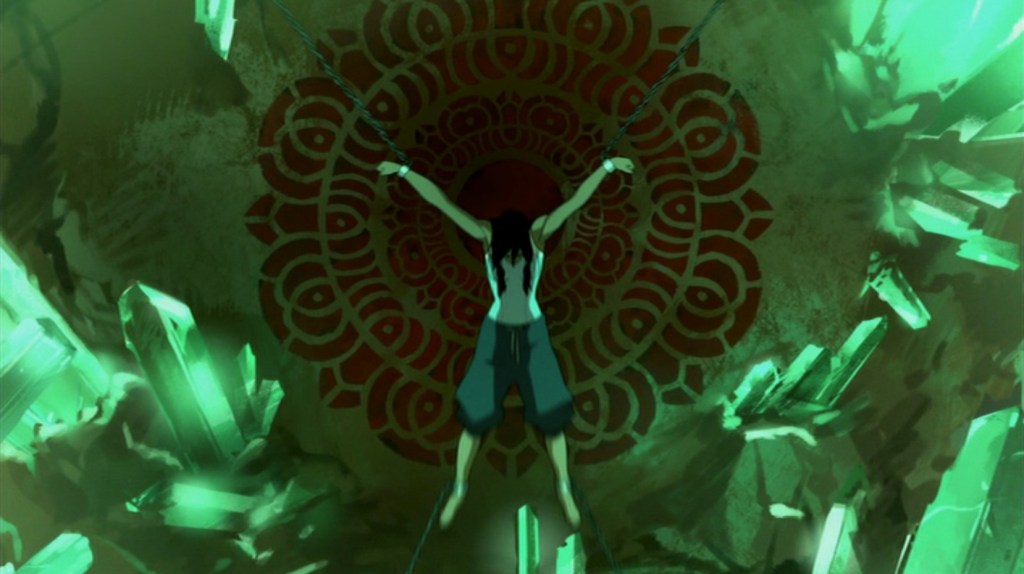
I keep saying it, but one of season 3’s biggest strengths is how long they waited to really have a showdown between Korra and Zaheer. They waited to even have her aware of his existence, waited even longer to have a “virtual” meeting between them in the spirit world, and now all the way into episode 12 she’s basically ready to surrender to him without ever having met in person. Another strength of this episode is that Korra acts more as the diplomat instead of just an Avatar action hero. It’s the benefit of having an older character over that of a child, and having her grow throughout the course of the series. Of course the fight between Korra and Zaheer is incredible, as is the rescue of Tenzin, which plays out like a military style extraction, but the strongest part of this episode is just how layered and intriguing Zaheer is as a villain. He’s calm, rational, shown to care for the other “villains” he surrounds himself with, is given a new power of flight through nothing more than complete peace, and when Korra believes he has killed her father, he responds with empathy. I can’t think of many TV or film villains that are as complex as Zaheer.
1 – The Terror Within (Season 3, Episode 8)
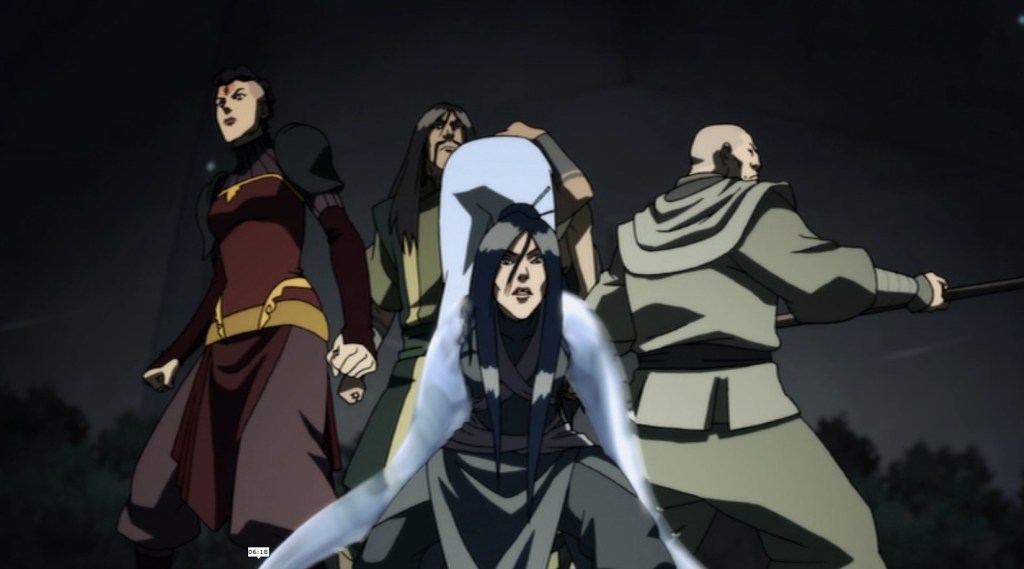
I feel I need to start by pointing out something about this final ranking list that I didn’t realize until going over it in the final formatting. When you look at every season, you typically have 2-3 episodes at the end that really act as a multi part finale. Of the entire top 10 of this list, a total of 8 of the episodes are part of the final batch of episodes for their seasons. I point that out because I always assumed something near a finale would dominate the top of my ranking. To even my surprise when I went though all 52 episodes, it was an episode from the mid way point of season 3 that nothing could really touch.
The first half of ‘The Terror Within’ alone would be enough to put it at the top. Zaheer and The Red Lotus somehow break into Zaofu during the night, and they manage to knock Korra out in a kidnapping attempt. Bolin and Mako just happen to awake and see them trying to escape, and a giant battle erupts. The battle itself lasts for a huge chunk of the episode, and it’s staged extremely close quartered. Basically Zaheer and his Red Lotus trio on a tiny platform as everyone else in the city bombards them. The villains are small in numbers compared to what seems to be an endless supply of heroes struggling to stop them. There is more real tension in this battle than any other action scene I’ve seen in the series. I do get a bit of a kick out of the fact that it’s staged similar to a Pro-Bending match, although not so obvious that it takes you out of the moment. Even on a rewatch I can be fooled into thinking Zaheer will get away with Korra. Now moving into the 2nd half of the episode, with Korra safe an investigation is launched to find out how Zaheer got into the city in the first place. This is where the episode suddenly becomes a very serious detective story, with the best executed reveal of the entire series. It would have been so easy to show Aiwei in any scene, whether in this episode or prior, as a mole working with The Red Lotus and still pull off an incredible episode. Holding off on that revelation was just so much better. Even Korra called the mole incorrectly, so in another shocking twist, Mako ends up being the best character of the episode. A character I spend the entire series wanting to fall asleep to, and my favourite episode is his greatest moment. There was a risk that having two very different styles in this episode wouldn’t have mixed well, but the chaotic action first half blends perfectly with the plot and twist heavy investigation second half.

